Wednesday, November 25, 2020

OpenBCI Announces Brain-Computer Interface Designed Specifically for VR/AR Headsets

OpenBCI, the neurotech company behind the eponymous open-source brain-computer interface (BCI), are making a new hardware and software platform specifically for immersive headsets.

Called Galea, the company says its new hardware is designed to attach to both AR and VR headsets, arriving with a multiple sensors designed to monitor biometric data streams in real time.

Galea is said to include a bevy of sensors, such as electroencephalogram (EEG), electrooculography (EOG) electromyography (EMG), electrodermal activity (EDA), and photoplethysmography (PPG) sensors, which are intended to measure data from the brain, eyes, heart, skin, and muscles.

OpenBCI hardware | Image courtesy OpenBCI

The company says Galea will allow researchers and developers to measure “human emotions and facial expressions” including happiness, anxiety, depression, attention span, and interest level—and use it to create more immersive content tailored to the individual. The idea is very similar to what we heard from Valve’s resident experimental psychologist Dr. Mike Ambinder during last year’s GDC talk on how BCI will change the nature of game design.

OpenBCI says it will provide researchers and developers early access to Galea, intended for commercial and research applications. Galea will also include SDKs to bring its stream of biometric data into “common development environments,” the company says.

“I believe that head-mounted computers integrated with human consciousness will drive the next major technology paradigm shift,” said Conor Russomanno, CEO of OpenBCI. “Galea is the realization of six years of research and development. We are providing the world with a playground for experimentation and development using multi-modal biometric data in tandem with next generation wearable displays.”

Founded on the back of a successful Kickstarter campaign in late 2013, OpenBCI creates consumer-grade biosensing systems built with open-source software and hardware. Today, the company’s hardware is used by researchers, academic labs, artists, and developers across 89 countries.

The post OpenBCI Announces Brain-Computer Interface Designed Specifically for VR/AR Headsets appeared first on Road to VR.


Ream more: https://www.roadtovr.com/openbci-brain-computer-interface-ar-vr-galea/

Cybershoes for Quest Kickstarter Reaches Funding Goal in First Day

Cybershoes, the makers of a locomotion peripheral for VR headsets, launched a Kickstarter late last week for a new Quest-compatible version of the device. Within only 12 hours of the campaign’s launch, Cybershoes for Quest reached its threshold funding goal of $30,000.

Unlike conventional VR treadmills, which require you to stand on a parabolic base and slide your feet with special, low-friction shoes, Cybershoes offers a seated experience that requires the user to slide a pair of shoe-mounted devices forward and backward to simulate walking or running in-game. To accomplish this, the devices include integrated barrel-shaped wheels in each shoe and an inertial measurement unit (IMU) to register foot orientation.

It sounds weird, and it is, but it’s both more compact and cheaper than a VR treadmill, and it’s easier to operate too.

Following its 2018 Kickstarter campaign for its first PC VR-compatible device, the Vienna-based startup is again raising funds for its next iteration of Cybershoes, this time focusing on a Quest compatibility module that is designed to also work with the company’s standard Cybershoe model.

The head-mounted Quest module includes an additional IMU, which when fused with the shoes’ data, can be processed to obtain X and Y motion. For power, the device plugs in directly to either Quest or Quest 2 via the USB-C port.

Image courtesy Cybershoes

The question with these third-party peripherals always ends up being game support, or the lack thereof. Developers will need to integrate support for Cybershoes into their games using the team’s SDK, something Vertigo Games has already done this for its popular zombie shooter Arizona Sunshine. 

Provided the campaign reaches the $60,000 mark, Cybershoes will also offer a workaround compatibility layer for other games via SideQuest, the unofficial store for Quest games and experiences.

“With a few games, like [The Walking Dead: Saints and Sinners], we’ve already established compatibility by adopting the Cybershoes to the game. The Cybershoes app will bind the Cybershoes movement onto the Quest’s touch controllers. This process is very similar to how compatibility is achieved on the PC version of the Cybershoes. In the last year, we’ve integrated over 50 games by finding out the best settings,” the team says.

The company is selling both the Cybershoes + Quest module through its Kickstarter, starting at the early bird price of $280. Alternatively, users who already own a pair of Cybershoes can buy a Quest module on its own for $50, which is estimated to retail for $80 after the campaign is concluded.

At the time of this writing, the campaign has already raised nearly $50,000, with 36 days remaining until the campaign’s close.

The post Cybershoes for Quest Kickstarter Reaches Funding Goal in First Day appeared first on Road to VR.


Ream more: https://www.roadtovr.com/cybershoes-oculus-quest-kickstarter-vr-locomotion/

Tuesday, November 24, 2020

Oculus CTO Wants Android Apps on Quest, But is “not winning” the Debate Within Facebook

Oculus CTO John Carmack has said publicly that he’d love to open up Oculus Quest to Android apps to boost the headset’s usefulness, but admits he’s “not winning” the debate internally at Facebook.

Although the Quest home environment looks nothing like the home screen of your Android phone, the headset actually runs the Android operating system underneath it all. Allowing users to install and run Android apps on the headset—if just in a ‘flat’ mode on a virtual screen controlled by a laser pointer—could drastically boost the value of the headset by bringing all manner of video players, web browsers, productivity tools, utilities, and even flat games to the device.

Android apps running on Quest is apparently something Oculus’ own CTO has been arguing for internally.

Legendary developer John Carmack—who for several years held the role of Oculus CTO but now maintains a less formal “consulting CTO” arrangement—said during his Facebook Connect keynote in September that he doesn’t believe Oculus will be able to convince a meaningful portion of Android developers to rewrite their applications specifically for the headset. Instead, he says, the company needs to find a way to bring existing Android applications to Quest.

[…] it also works cooperatively with sort of our Android applications like Fandango or the other things there, and that’s still one of the things that absolutely kills me, where I think we need more Android applications.

We do not have a sorted out strategy—I’ve got a long spiel about this that I’m not gonna have time to get to—but we have all these existence-proofs and examples of… Microsoft tried really really hard to move all apps to a brand-new system [UWP and/or Windows Phone] and it just… doesn’t work out… I don’t think it’s gonna work out for us.

I think that we need to support our Android apps [on the headset] in a broader sense. We have progressive web apps as the backstop for everything, but on the mobile platforms the progressive web apps […] generally lose out [in terms of performance] to native applications, and we care more about performance in VR than in mobile systems, so I think we need a solution there, and we haven’t sorted it out.

If Oculus allowed existing Android apps onto Quest, it could radically improve the usefulness of the headset by allowing users access to a much wider range of apps. They wouldn’t be ‘native’ to VR of course, but it’s easy to understand how much more value users would see from the headset if they could load up, say, the Disney Plus app on a big virtual screen or run their favorite web browser on the headset instead of being stuck with the default. And wouldn’t it make sense to be able to run the Facebook app on Quest?

Because Quest is already running Android, it would be trivial from a technical standpoint to get Android apps up and running on the headset, and there’s a few ways Facebook could approach it.

For one, it could simply allow access to the Google Play store on the headset, allowing users to download apps they already own through the store, and then project those apps onto a flat screen inside the headset.

But it seems highly unlikely that Facebook would take this approach, as the company has clearly followed the ‘walled garden’ playbook of making the Oculus app store allowed on the headset. Instead of the Google Play store, Facebook could begin accepting ‘flat’ Android apps into the Oculus store and allow them to be distributed that way.

The company could also skip its own store and choose to allow users to sideload any Android APKs they have access too, leaving the feature mostly in the hands of power-users.

Unfortunately, we may not see any of these avenues pursued, despite Carmack’s insistence. In a recent tweet on the topic he noted, “I continue to argue for [Android apps on Quest], but so far, I’m not winning.”

The post Oculus CTO Wants Android Apps on Quest, But is “not winning” the Debate Within Facebook appeared first on Road to VR.


Ream more: https://www.roadtovr.com/oculus-quest-android-apps-carmack-debate/

Quest’s Official Non-store App Distribution Channel is Coming in Q1, 2021

Facebook announced back in June that it planned to offer developers a way to distribute Oculus Quest apps outside of the official, curated, Quest store. Now the company indicates it has “high confidence” that the feature will be deployed in Q1, 2021.

Since the launch of Oculus Quest, Facebook has opted to ‘curate’ the Quest store by selectively permitting apps based on factors like quality, presentation, and scope. After backlash from some developers, and the burgeoning Quest ‘sideloading’ platform SideQuest, Facebook said it would offer an official avenue for developers to distribute their apps outside of the Quest store.

New Quest Distribution Path

In a video posted by the official Oculus Developers page on Facebook, Clorama Dorvilias, product manager at Facebook Reality Labs, explained that Oculus had added a new ‘Roadmap’ section to the developer website which highlights upcoming development features.

In previewing the roadmap, Dorvilias showed that the “New Quest Distribution Path” feature is expected in Q1, 2021. The company had previously said the feature was expected in “early 2021,” and now indicates “high confidence” that it will be available within Q1.

“Developers will have a way to distribute applications to anyone without having to be accepted in the Oculus Store and without sideloading,” the roadmap description says. “Applications will have to meet the obligations of the Oculus Content Policy, but won’t be held to the same technical standards as official Oculus Store Apps.”

Additionally, the roadmap indicated that a beta version of the feature would be made available to select developers in December, before the wider release in Q1, 2021.

Other items indicated on the developer roadmap for December: OpenXR support in UE4, a keyboard overlay for native Android apps, Unity debug symbol upload for OVR Platform Tool, crash analytics in the Developer Dashboard, and Visual Studio code debugging for UE4 and native VR apps.

Unlisted Apps & Keys

Oculus hasn’t offered much detail about how the Quest non-store distribution channel will work, or what, if any, limitations it will include beyond the need to comply with the Oculus Content Policy.

One approach, hinted by Oculus earlier this year, would be to have ‘unlisted’ application pages that can’t be found through the official Quest store, but which can be linked by URL, allowing developers to point users to the application page through a direct link. A parallel approach could be to allow developers to generate and manage ‘game keys’—which could be given away or sold through any channel of the developer’s choosing—which users would redeem through their Oculus app. The latter is already possible, in fact, but only available to applications which have been approved for distribution on the official Quest store.

The Cut

One big unanswered question about the non-store distribution channel for Quest is whether or not developers will be allowed to charge for applications distributed this way and, if so, whether or not Facebook will expect to take its usual 30% cut of the sale.

App stores generally justify taking a portion of app sales because they connect developers with customers by providing a marketplace and provide promotion within that marketplace. But ‘unlisted’ apps wouldn’t see any of those benefits because they wouldn’t appear in the official store, leaving it up to the developer to seek out customers directly.

Side Hustle

It also remains to be seen what this official non-store distribution channel will mean for SideQuest, which has become the defacto non-store distribution channel for Quest via sideloading. Depending upon the structure of Oculus’ approach, SideQuest could become a convenient platform for developers to list their unlisted apps for ‘store-like’ discovery by its community of users. But if Facebook doesn’t want to play nice, they could put policies in place to prevent this.

The post Quest’s Official Non-store App Distribution Channel is Coming in Q1, 2021 appeared first on Road to VR.


Ream more: https://www.roadtovr.com/oculus-quest-distribution-non-store-q1-2021/

‘Espire 1: VR Operative’ Earned $3M in Revenue in First Year

Espire 1: VR Operative (2019) launched across all major VR headsets this time last year, bringing a mix of high-flying acrobatics and stealth combat to the table. Now developer Digital Lode says Espire 1 has generated “over $3 million in revenue” since its November 2019 launch.

While revenue reports around the industry aren’t a usual sight, Espire 1: VR Operative seems to have benefitted greatly from its simultaneous release on SteamVR headsets, PSVR, and Oculus Quest.

Launched on November 22nd, 2019, Digital Lode and publisher Tripwire Interactive say the game “continues to remain popular in the VR space as a top-selling title on the Oculus Store and one of the few VR titles to earn over $3 million in revenue.”

Taking on the role of futuristic drone operator, you slink around, avoid security cameras, defuse trip mines, and gank plenty of faceless baddies that get in your way—a bit like a VR version of Metal Gear.

In our review of Espire 1, we noted that, although rough around the edges, the game excels in delivering some familiar stealth combat in a more immersive package, letting users do some superhuman acrobatics while traversing its multi-layered levels.

To celebrate its one year launch anniversary, Digital Lode has released an Anniversary Update on the Quest and Quest 2 versions of the game, which includes a number of visual, performance, and gameplay enhancements. Improvements specific to Quest 2 include:

  • Increased pixel resolution and clarity with less aggressive dynamic foveated rendering
  • Higher mesh resolution for guards and other characters
  • Bullet impact particles from the PlayStation VR version added
  • Added ricocheting bullets for players and guards
  • Unique bullet impact sound effects added for each surface type
  • Color-graded and optimized for the Oculus Quest 2 LCD screen
  • Enhanced audio: When the player crouches down, the game’s soundtrack dynamically submixes the music down while increasing the sounds of footsteps and voices of guards

The version supporting the original Oculus headset also benefits from improved shaders and materials, increased performance, and better loading times.

The post ‘Espire 1: VR Operative’ Earned $3M in Revenue in First Year appeared first on Road to VR.


Ream more: https://www.roadtovr.com/espire-1-3m-revenue-oculus-steam-psvr/

Monday, November 23, 2020

Vetan VR Studio of ‘Waltz of the Wizard’ Pausing PSVR Development Until Sony Addresses PS5 Roadmap

Veteran VR developer Aldin Dynamics, the studio behind Waltz of the Wizard, says it is pausing development on PSVR titles until Sony clarifies plans for the future of VR on PS5.

While Sony has brought PSVR to PS5 thanks to backwards compatibility with PS4 titles, the company has been tight-lipped on whether it plans to launch new VR hardware to bring its VR ambitions into the next generation.

For developers like Aldin Dynamics, that’s created an uncertain future which makes it difficult to commit limited time and development resources to the platform.

The studio has been working in VR since the earliest days of the industry. After its release all the way back in 2016, the studio has used its title Waltz of the Wizard as a perpetually updated test-bed for new ideas, like an innovative method for VR locomotion.

Aldin’s ‘Waltz of the Wizard’ | Image courtesy Aldin Dynamics

Though the game is available on all major VR platforms, Aldin’s CEO, Hrafn Thorisson, today announced the studio is pausing development on the PSVR version of the game until Sony addresses its future plans for VR on PS5.

“Sony apparently isn’t hellbent on keeping 1st gen PSVR away from PS5, but question remains what they’ll do next. I think they should do PSPVR (PS5 connection option), he said. “We’re holding off on further VR product updates on PS (including Natural Magic [a major upcoming expansion to Waltz of the Wizard]) until Sony talks what’s next.”

Thorisson’s mention of “PSPVR”—a reference to Sony’s prior PSP gaming handheld—is a suggestion that the company’s next VR headset should be standalone like Oculus Quest, with the option to plug into PS5 for rendering greater performance.

Speaking to Road to VR Thorisson elaborated on the studio’s decision decision, saying that PSVR’s aging hardware has fallen out of step with where other major VR platforms are heading.

“I think Sony did an admirable job with ’90s tracking technologies and controllers, after they dropped their gamepad requirement. In many ways Sony did a good job—but the platform became instantly outdated after release.” he said. “Oculus and SteamVR platforms let us accomplish our vision for what a VR experience should be, and the latest iterations of hardware—especially Oculus Quest—are further showcases of how VR friction is decreasing, usability improving, and retention of users is increasing with every step taken in VR.”

Image courtesy Aldin Dynamics

Limitations in tracking, especially, have made it difficult to design next-gen VR content, Thorisson said. And with little guidance on Sony’s future plans for VR on PS5, the extra work needed to keep content and features in sync with more advanced VR platforms is a risky investment. As of now, the upcoming expansion to Waltz of the Wizard, dubbed Natural Magic, won’t be heading to the PSVR version of the game—at least until Sony clarifies its VR roadmap.

“Sony needs to upgrade their platform significantly, and I personally hope the reason for their silence is that they’re hard at work on a PSPVR or otherwise a massive improvement of PSVR 2.0,” said Thorisson.

The post Vetan VR Studio of ‘Waltz of the Wizard’ Pausing PSVR Development Until Sony Addresses PS5 Roadmap appeared first on Road to VR.


Ream more: https://www.roadtovr.com/aldin-dynamics-waltz-of-the-wizard-psvr-ps5-roadmap/

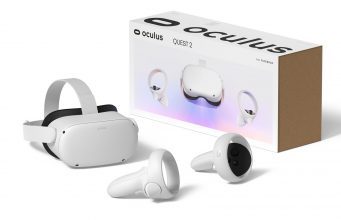
Quest 2 Stock Starting to Slip Ahead of Black Friday

Though it has held fairly steady since its launch in October, the stock of Oculus Quest 2 is starting to dwindle heading into the Black Friday holiday shopping season.

At the launch of the headset, Facebook told Road to VR the company was planning to make “many more” units of Quest 2 than the original Quest headset, which was very difficult to find during the previous holiday shopping season.

Despite additional challenges to manufacturing and logistics due to the Coronavirus pandemic, Quest 2 stock has been relatively easy to find from both Oculus and third-party retailers up to this point. However, the headset is starting to see shipping delays that are likely to get worse as we head into Black Friday, Cyber Monday, and the 2020 holiday shopping season.

Oculus Quest 2 & Rift S Stock Check

We checked stock availability for direct purchases from Oculus.com for Quest 2 (64GB), Quest 2 (256GB), and Rift S across all regions where the headsets are sold. The latest shows the least expensive 64GB version of the headset seeing small shipping delays in most regions. We expect those delays to grow and begin to bleed into the 256GB version as holiday shopping ramps up.

Meanwhile, Rift S availability is holding pretty strong so far, though less demand for the headset is expected considering Oculus has announced the Rift product line will be discontinued in 2021 as the company fully shifts focus to standalone VR headsets with optional PC tethering.

Where to Buy Quest 2 and Look for Stock

It seems likely that Quest 2 stock is going to become scarce this holiday season. If you’re unable to find it direct from Oculus, here’s a complete list of official third-party retailers in each country, including the local MSRP so that you know you’re getting the right price.

Price: 64GB ($480 AUD), 256GB ($639 AUD)

Price: 64GB (€350 EUR), 256GB (€450 EUR)

Price: 64GB (€350 EUR), 256GB (€450 EUR)

Price: 64GB ($460 CAD), 256GB ($630 CAD)

Price: 64GB (€350 EUR), 256GB (€450 EUR)

Price: 64GB (€350 EUR), 256GB (€450 EUR)

Price: 64GB (€350 EUR), 256GB (€450 EUR)

Price: 64GB (€350 EUR), 256GB (€450 EUR)

Price: 64GB (€350 EUR), 256GB (€450 EUR)

Price: 64GB (€350 EUR), 256GB (€450 EUR)

Price: 64GB (¥37100 JPY), 256GB (¥49200 JPY)

Price: 64GB (€350 EUR), 256GB (€450 EUR)

Price: 64GB ($570 NZD), 256GB ($739 NZD)

Price: 64GB (€350 EUR), 256GB (€450 EUR)

Price: 64GB (€350 EUR), 256GB (€450 EUR)

Price: 64GB (₩414000 KRW), 256GB (₩553000 KRW)

Price: 64GB (€350 EUR), 256GB (€450 EUR)

Price: 64GB (€350 EUR), 256GB (€450 EUR)

Price: 64GB (Fr. 400 CHF), 256GB (Fr. 500 CHF)

Price: 64GB ($320 USD), 256GB ($420 USD)

The post Quest 2 Stock Starting to Slip Ahead of Black Friday appeared first on Road to VR.


Ream more: https://www.roadtovr.com/buy-oculus-quest-2-stock-black-friday-cyber-monday/

At $600K, Tundra Tracker Smashes Kickstarter Goal in Less Than 24 Hours

Tundra Tracker, the SteamVR Tracking tracker in development by Tundra Labs, has well exceeded its $250,000 Kickstarter goal in less than 2...