Saturday, November 23, 2019

‘Espire 1: VR Operative’ Review – Solid Snake, But Rough Around the Edges

For better or worse, so far Konami has shown zero interest in bringing its long and storied Metal Gear series to VR. But if you’re looking to scratch that stealth combat itch with more than a flair for superhuman acrobatics, you may find Espire 1: VR Operative a serviceable Generic Snake, albeit a bit rougher around the edges than you may like.

Espire 1: VR Operative Details:

Official Site

Developer: Digital Lode
Publisher: Tripwire Interactive
Available On: Steam (Vive, Rift, Index, Windows MR), Oculus (Rift, Quest), PlayStation Store (PSVR)
Reviewed On: Rift, Vive
Release Date: November 22nd, 2019
Price: $30

Gameplay

Espire 1 offers up a pretty standard story that fits in the same basic vein as many entrants in the Metal Gear franchise; there’s a terrorist group, superhuman agents, infiltration of opaque national intelligence agencies, and plenty of talking heads that radio in to give you constant guidance and objectives along your stealthy way—that’s of course in addition to the game’s trope of puppeting a military-grade telepresence robot, of which there is ample supply stashed at various points throughout the game, making death an inconvenience, and not a total showstopper.

Robot-stuff notwithstanding, you should feel right at home dispatching the faceless, nameless baddies with a variety of weapons, some silent, while others announce your presence to the world. It’s your job to slink around, avoid security cameras, defuse trip mines, crawl through conveniently placed air ducts,  you know, spy stuff.
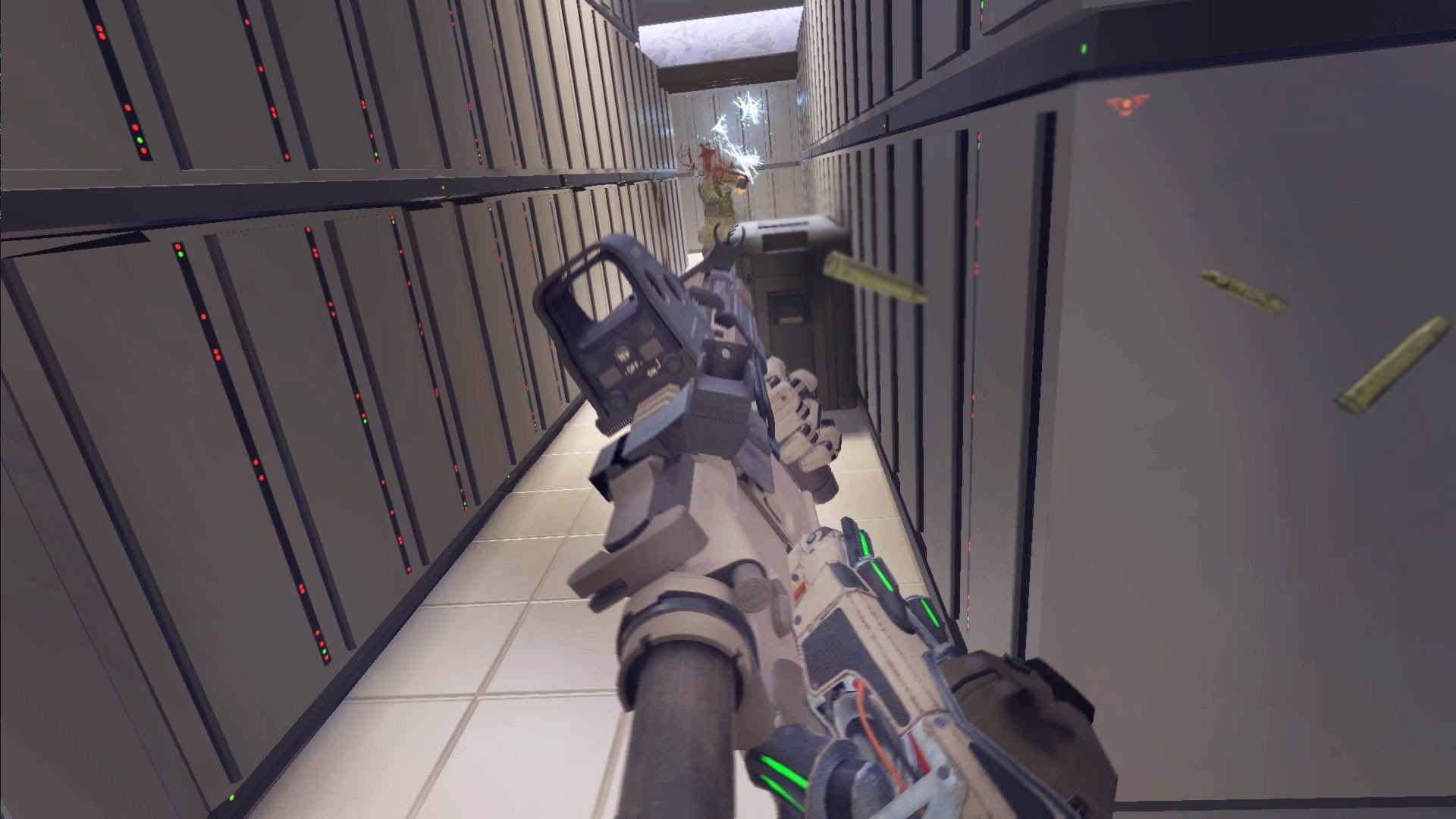
Image courtesy Digital Lode

Shooting is predictably a big part of Espire 1, and it’s a pretty unforgiving experience; you don’t simply line up the dot in your red dot scope or your green glow sights and blast away. I mean, you can totally do that, but there’s actually significant recoil applied to your gun after every shot. That’s not to say it’s inherently a bad thing, although it does make your rely on a few other tricks at your disposal so you aren’t wasting an entire magazine on a single guy, namely your ability to temporarily go into bullet time. Not only does it slow down time, but it also smooths out your hand movements so you can get a better, more focused shot when it counts the most. Reloading is done by jamming your gun down onto an available magazine sticking out of your hostler, which is less fiddly than it sounds.

You can also use what’s called ‘Espire Vision’, which highlights in the vicinity all enemies, objectives, and traps like auto-turrets and laser mines. This feels a bit cheaty to be honest, but I can see why it exists; it eliminates some of the frustration of coming around a corner with your pants down. There’s also a tossable camera that you can throw around corners, which is actually an even cooler idea in practice, but I found myself more readily abusing Espire Vision instead simply because of how easy it was, and how regularly I was allowed to use it. Espire Vision, repairing, bullet time (more on that in a bit), and stunning guards with the repair tool all takes energy, which auto-refills over time.


There are genuine moments in the beginning when you’re scared stiff of being caught, as you slink around corners and hope the guards aren’t alerted to your presence. I’m not the most stealthy of players though, and I only died once throughout the campaign, which lasted a little under six hours for a single play-through (end game content prolongs this substantially, but more on that below). That’s true even near the end, where you encounter heavies that take multiple shots to kill, and a few baddies with active camouflage that require you to use your Espire Vision—one of the few times when you actually have to use it outside of detecting otherwise unseen laser mines.
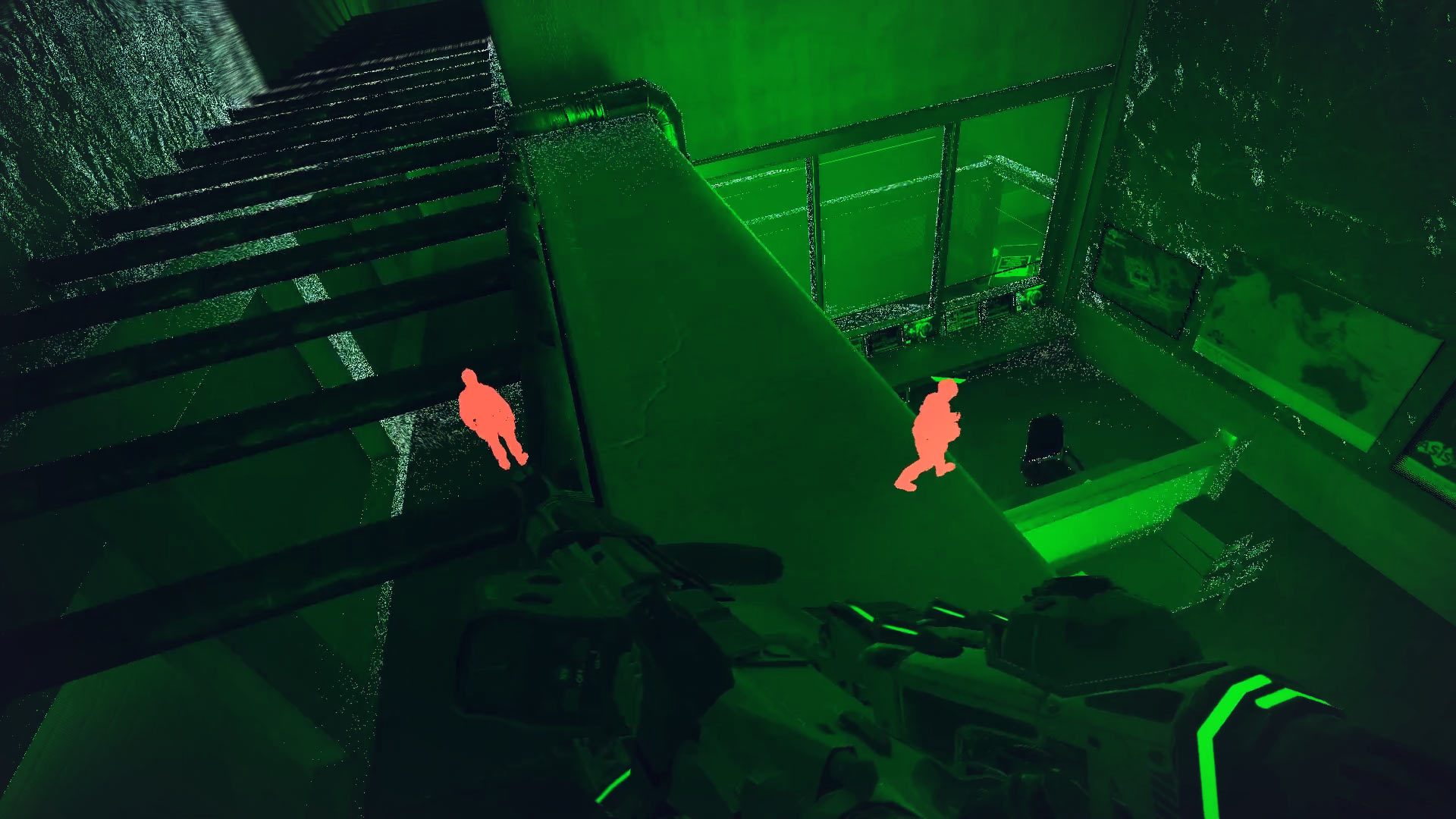
Image courtesy Digital Lode

I didn’t die that many times because it’s super easy to fix yourself with your repair tool, and you also seem to have a pretty large number of hitpoints available to you. Juice is infinite too, and while it takes its time regenerating, you can easily wait it out by ducking into an air shaft or in a quiet place behind a box. Repairing is done by touching the device to a number of holographic orbs placed in front of you. Why? Because you’re a robot in the future and you should stop trying to make sense of things, that’s why (apparently).

Like the Hitman series, you don’t necessarily need to be a silent killer to pass any of the game’s missions, although your score will take a major hit as you’re expensed for every bullet, gun, death, etc. The less Rambo-like you are, the less money you’ll spend, and the more cheats you’ll unlock for end game fun. I would have liked to see a higher level of difficulty here in place of the unlockables, which include cheats and starting weapons. There isn’t any difficulty levels to speak of too, only progressively harder objectives to fulfill such as freeing all hostages under a minute, or using your repair weapon to knock out all the guards in a level. That’s up to you though.
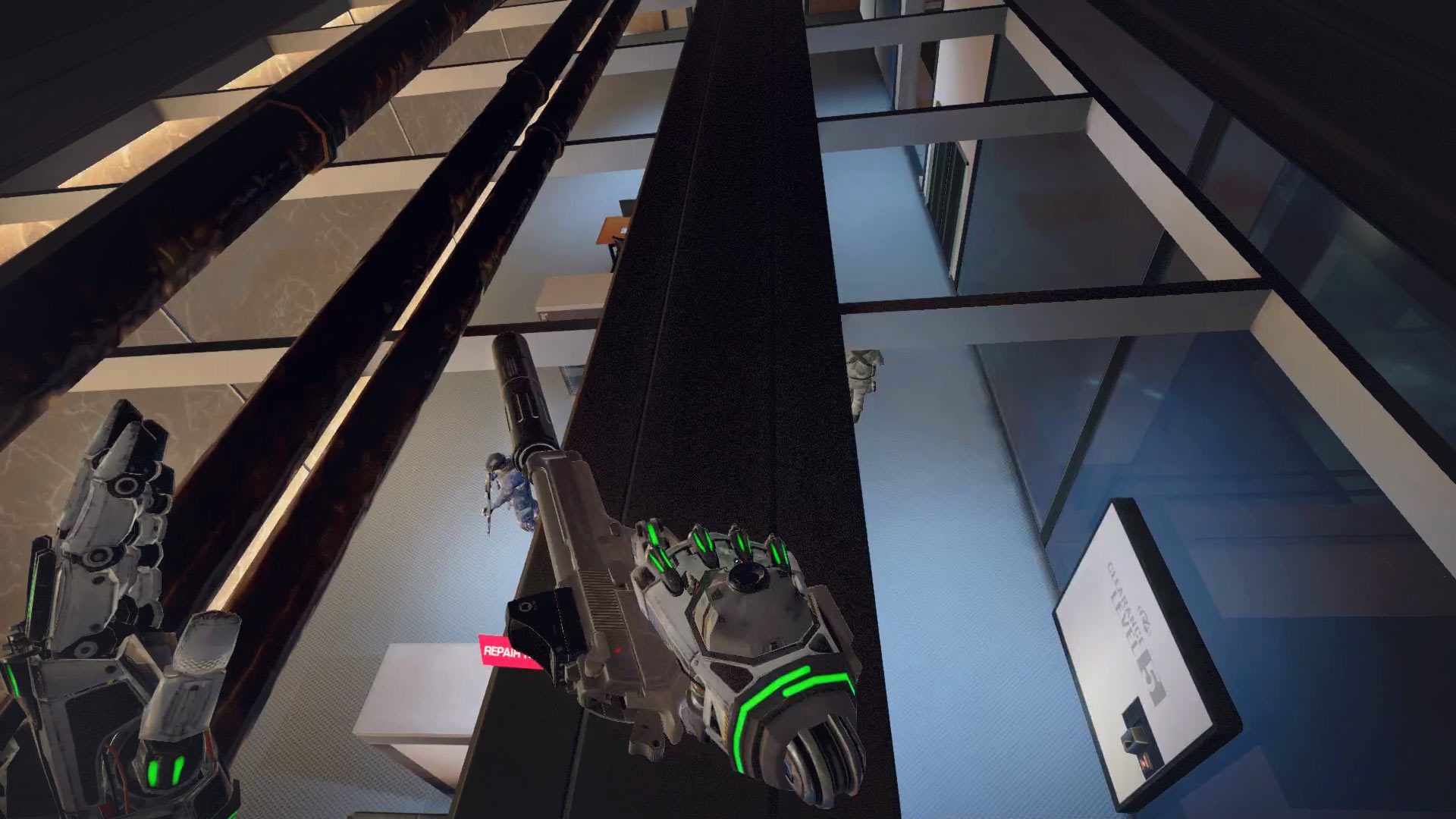
Image courtesy Digital Lode

There are a few real sore spots in Espire 1, the most egregious of which is melee. It’s rough, and I never once felt like I actually intentionally landed a punch on a bad guy after running out of bullets. When you get too close to an enemy, their character animation magically teleports them a meter away from you, which feels wrong on so many levels. You can also technically “hold up” bad guys by snatching their weapon from their hands, but this is really hit and miss unless you’re using bullet time, and even then it’s not a sure thing due to the aforementioned animation fuckery.


AI is also painfully dumb, and going undetected whilst walking in front of a guard only 20-feet away is laughably easy. It’s unclear what they can see, and where their field of vision ends, so you’re basically just guessing and hoping they don’t see you as they robotically walk their planned loops. Make not mistake: I’m not hating on planned loops here. After all, that’s a well-established feature of the genre.

That said, it’s still really fun to climb a wall, sneak over and stun a bad guy, or alternatively launch yourself through the air, engage bullet time, and line up a few choice shots to take out multiple targets, all while having zero auto-aim at your disposal for maximum self-pats on the back. All of this just nearly makes up for some of the unsightliness of dumb AI.


Once all is said and done, you can do a few cool things with Espire 1 to keep the fun going. You accumulate unlockable cheats by fulfilling extra objectives during the campaign, which changes up the feel by giving you things like invincibility, invisibility, a one-shot golden gun, etc. You won’t be able to save that progress though, or get on the leader boards, but unless you’re really a points-chaser, you probably won’t care about the leader board anyway. I certainly don’t. But you might, and if you do, there’s plenty of opportunity here.

Not only that, there are challenges too, which are apart from the campaign. Here you’ll be able to hone your stealth, combat, and various objective-focused things.

Immersion

Level design is actually one of the real high points to Espire 1. While the game’s multilayered levels offer admittedly contrived, conveniently person-size air ducts, they play an important role in filling a melange of attack vectors, be it through an air duct, overhead by way of pipeworks, through easier side routes, or straight down the middle through a gang of guards. It’s really up to you, and this makes me actually think about where to go and what to do next as opposed to dumbly following orders and waypoints to my next bullet sponge. Ok, enemies are bullet sponges, and I would have liked at least more than a single boss to fight, but you catch my drift. Anway, I like it when games don’t hold your hands and simultaneously offering help—not forcing it upon you—when you need it most.
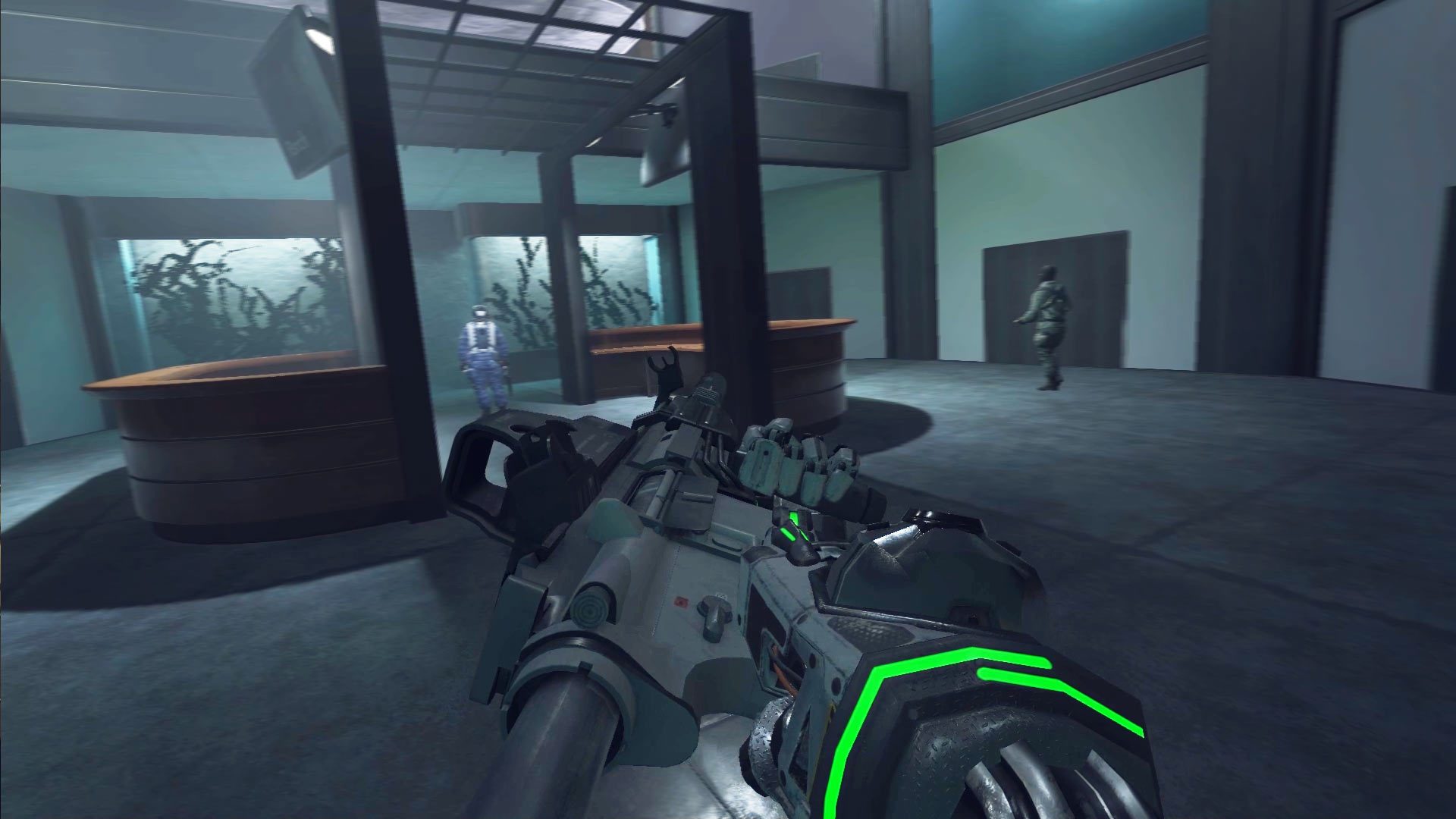
Image courtesy Digital Lode

It’s easy to get lost in the sprawling government facility throughout the game’s six missions, and there’s a degree of backtracking that you have to do too, although I was happy to see that Espire 1 avoids the temptation of simply giving you a map and floating objectives, which would otherwise make it feel a little more flimsy, and a little more hand-holdy. You can however toss your repair device on the ground to give you a line to your next objective if you do find yourself in a tight spot, however your omnipresent mission buddies will always give you some sort of clue as to where to go to next.

That said, voice acting is particularly good, but the rate at which the game launches the same lines at you over and over really makes me want to turn off audio completely. The cutesy teenage Japanese girl voice goes from interesting to downright unbearable as you’re fed the same prompting dialogue, something that magnifies in the game’s challenge portion. The same goes for whenever you’re hurt, as your served up a barrage of the same shrill lines about heading for covers and healing. Here, I would have liked to be left to my own devices, and the game definitely steps on some toes by insinuating I can’t see the plainly visible health meter.

Visually the game is fairly dark, drab, and doesn’t offer a bunch in variability when it comes to the environment, but it seems to be cohesive enough graphically.

Positional audio is less-than-alright however, as solid structures don’t occlude sound in the slightest, so you can constantly hear enemies prattling away to themselves behind massive concrete slabs, or sometimes entire floors of a building, which forces you to use Espire Vision to confirm they are indeed not walking on top of your head, or sticking their heads into your armpits.

Climbing is a missed opportunity due to it lack of haptic feedback the transience of the world’s geometry (i.e. you have ghost hands). There’s a slight audio cue when your hand touches a grabbable surface which is typically metal, but your hands can pass through geometry with zero haptic feedback to help you understand where you can climb and where you can’t, making the world feel like a less solid place in general. Climbing involves guesswork, and that’s not great.

Espire 1 also features voice commands, but not only will you feel silly shouting ‘Freeze’ at an enemy, but I found it didn’t work all the time, so I basically just forgot about them.

Comfort

If you’re looking for maximum movement, you’ll eventually find yourself swinging through the air like Spider-Man. Although you can take it easy by climbing one hand at a time, flinging youself around isn’t only more efficient, but it’s actively encouraged during timed events. Of course, this level of unpredictable movement can cause discomfort in some users.

If you’re planning on going full ham on being Spider-Man, you may want to use the game’s ‘Control Theatre’, which applies a grid around your field of view that creeps in every time you turn or move. I turned this off in the settings immediately, but it is a tried and true method for keeping the player more grounded, as it eliminates movement in your peripheral, something that typically triggers discomfort in sensitive users.
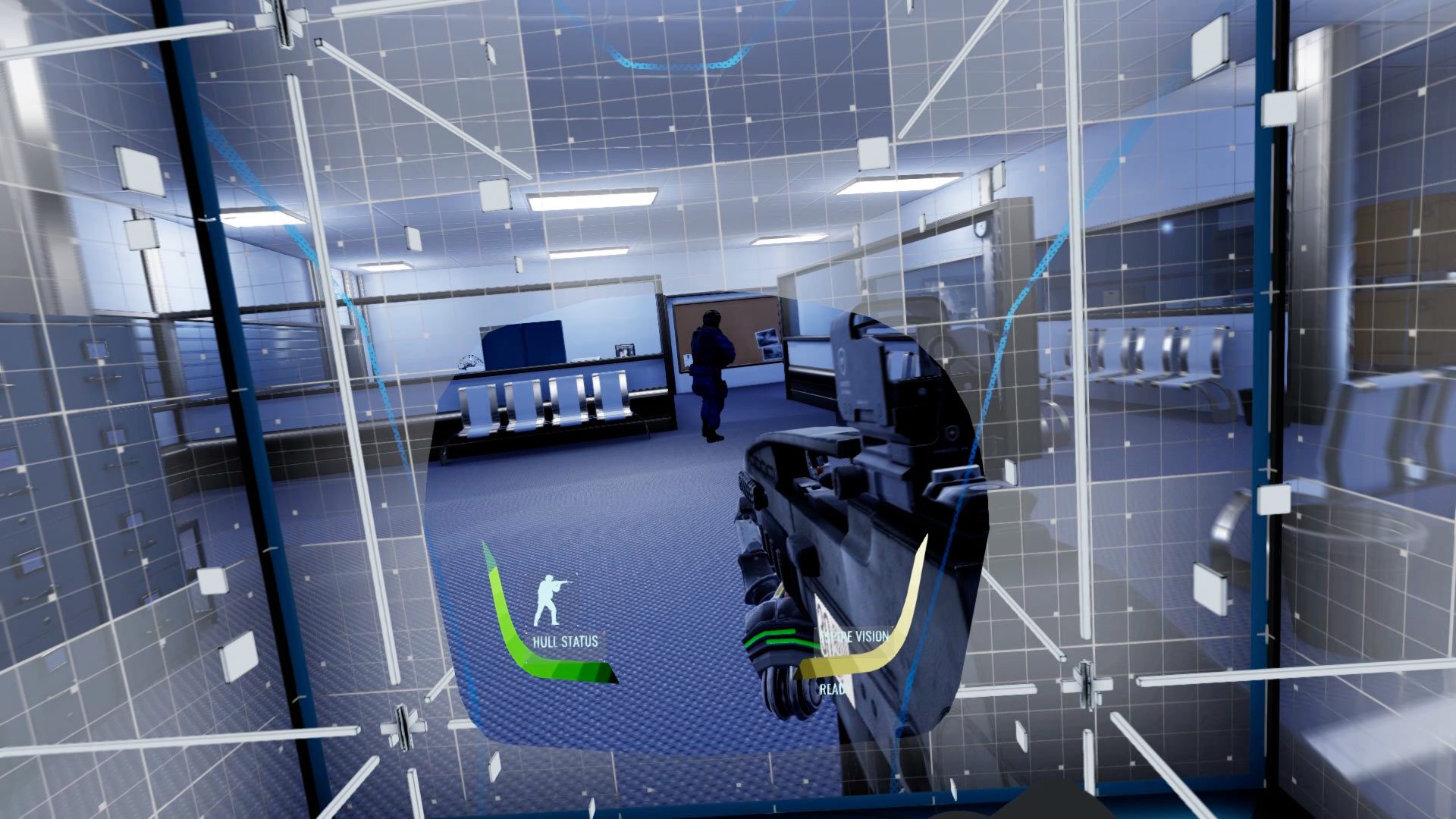
Image courtesy Digital Lode

Variable snap-turn is also available, but you can just as easily forget it if you have an inside-out tracked headset, as you can simply move forward with the stick/touchpad forward movement scheme. Nope, no smooth motion turning here, but you shouldn’t need it if you aren’t on an OG Rift CV1 or a PSVR.

There’s also no teleportation, which is demonstrably the most comfortable (read: not most immersive) way of moving around. That may be for the best of things, as you’ll want to move quickly and fluidly when shit hits the fan.

The post ‘Espire 1: VR Operative’ Review – Solid Snake, But Rough Around the Edges appeared first on Road to VR.


Ream more: https://www.roadtovr.com/espire-1-vr-operative-review-solid-snake-rough-around-edges/

Friday, November 22, 2019

A Three-game VR Workout Routine That’s as Fun as It Is Physical

VR is finding uses in everything from art and design to training, research, and entertainment. An unexpected byproduct of VR’s immersion is its ability to flip the notion of in-home entertainment being necessarily sedentary. With the right games and techniques, VR can be in fact be an excellent workout. Here we’re sharing a VR workout routine that’s designed to be as fun as it is physical.

Yes, there are dedicated VR apps specifically designed for fitness. But if you’re anything like me, the biggest challenge is not the ability to exercise, but maintaining consistent motivation. Luckily it’s easy to get yourself to workout if it’s a byproduct of something inherently fun—the difference between lifting weights vs. playing a sport.

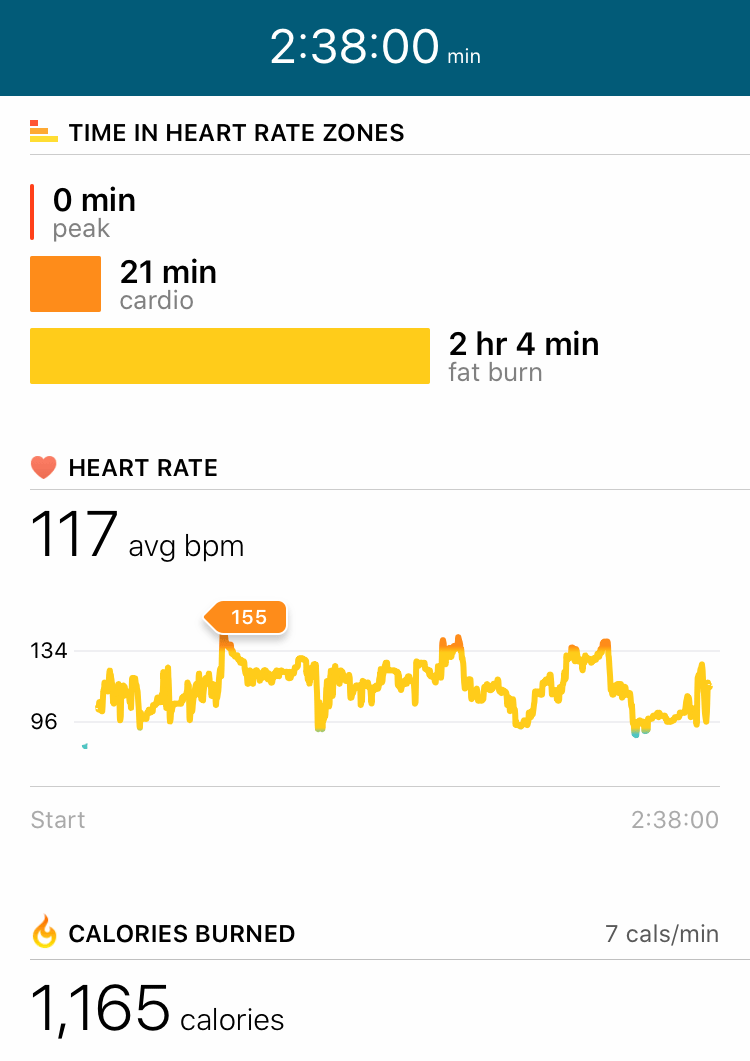
So I’ve put together for myself a three-game VR workout routine in which none of the games are explicitly made for fitness (which means they focus first and foremost on fun), but combined with the right settings and technique can be a solid workout; here’s my FitBit tracked stats after a session.

Of course, what you get out of any workout depends on what you put in. Yes, you could play these games without putting in nearly this much effort, but I was playing for both fun and fitness, so I really put myself into my movements. I’ll explain below what kind of techniques will help you put the most into—and get the most out of—each game.

Since not all of these games are available on all VR platforms (we’ll note where you can find them), you can make up your own combination of games and time spent.

Grab a big cup of water (you will need it for breaks) and strap that headset on tight—here’s the rundown:

Arms: 1 Hour – Beat Saber

Available on: Rift, Steam, Quest, PSVR
The Game

Beat Saber is a rhythm game that emphasises motion over timing. With a growing set of built-in tracks with polished beatmaps, it’s easy and fun to play, and very engaging trying to work your way up from Easy to Expert+ difficulty levels. Tracks vary in intensity, even at the same difficulty level; you’ll start to get a feel for which ones demand the most effort. [Read Our Beat Saber Review]

Settings & Technique

Play at the highest difficulty level that you’re comfortable with. Expert+ will of course be the most physical, and you should ideally build your way up to that, but even playing on Hard or Expert, the right technique will get your blood pumping. I highly suggest playing with ‘No Fail’ enabled; this will let you focus on fitness and flow rather than getting interrupted by failing a song.

The key is big swings. Keep your feet planted; focus less on your wrists and more on moving your arms. I find that the best way to have fun while putting in effort is to try to swing at each block with as much force as I can while still managing to reach the next block in time. The key is to smoothly move your swings from one block to the next; this makes a fun challenge where you need to strategize your movements to consider how to most efficiently move from one swing to the next even while making big, hard swings. When you really get into the zone you should feel that satisfying flow state that will carry through through.

You’ll want to take off the headset for a five minute cooldown and water break when you find yourself really out of breath. See if you can build yourself up to completing one entire ‘album’ before taking your break (albums have different lengths, so choose wisely).

Legs: 30 Minutes – Pistol Whip

Available on: Rift, Steam, Quest, coming soon to PSVR
The Game

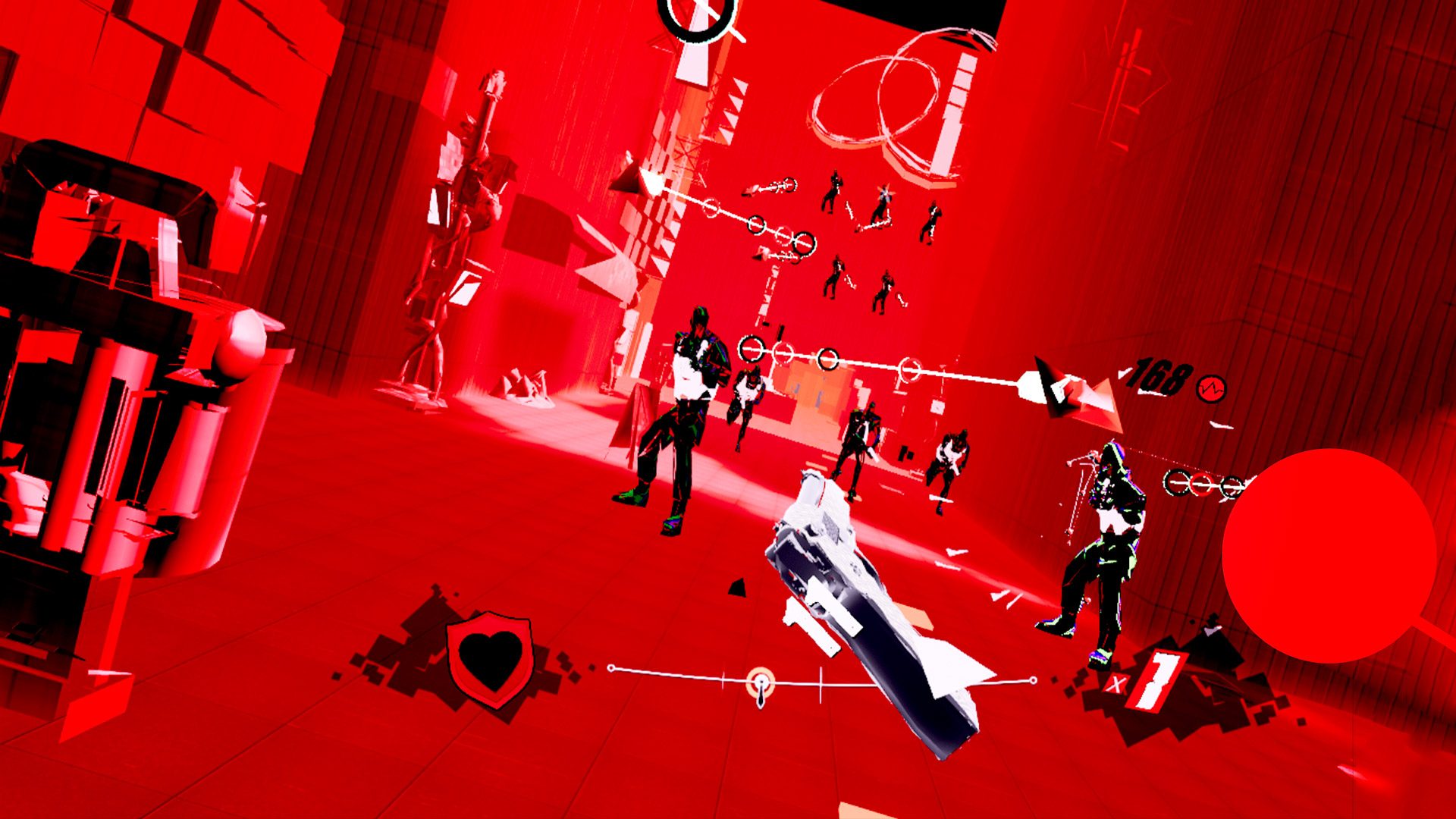
Pistol Whip is a rhythm shooter focused on flow and target management rather than aiming precision. Enemies appear as you move forward through the level and it’s your job to dispatch them while also dodging their incoming fire. Pistol Whip can be a great leg workout, making it a perfect complement to Beat Saber. [Read our Pistol Whip Review]

Settings & Technique

Similar to Beat Saber, I highly recommend playing at the highest level you can and with ‘No Fail’ enabled; this will ensure you don’t get interrupted or frustrated by failing a level. Higher difficulty requires more movement and will provide a better workout. I also highly recommend the ‘Dual Wield’ mode, which will put a gun in each of your hands instead of just one. With two guns it’s easier to find that satisfying flow state that will keep you going.

The key for a good Pistol Whip workout is to keep your feet planted as often as possible. From here you’ll need to move your upper body around to dodge incoming fire as you return fire to kill enemies. Moving in this way will make great use of your legs, don’t be afraid to get down real low to dodge; not only is it an effective technique for dodging, it’s also going to get those leg muscles flexing.

Listen to the music and keep your body moving to the beat. Combining your shooting and dodging into a continuous flowing motion is the key to fun and fitness in this game.

Cooldown: 30 Minutes – Until You Fall

Available on: Rift, Steam
The Game

Until You Fall is a rogue-lite melee combat game in which you battle as far as you can until you inevitably perish. With each run you’ll earn money which can be used to buy and upgrade weapons to make you stronger for your next bout. Being a successful knight requires patience and strategy, making this a great cooldown game because you can flex your brain while your muscles wind down. [Read Our Until You Fall Review]

Settings & Technique

Just like Beat Saber the key here is to make big swings. This isn’t just for your workout though, bigger swings in Until You Fall mean more damage dealt to enemies, so you’re killing two birds with one stone.

In the game you can choose from a handful of weapons to hold in each hand. If you pick one of the ‘talisman’ items (which give stat boosts but cannot block or attack), you’ll be able to concentrate all of your physical effort into one arm. Try alternating the talisman into your opposite hand each time you die, this will force you to train up the coordination and muscle memory in your non-dominant hand which will help you in the game later if you switch back to using a weapon in each hand.

– – — – –

Addendum

Mix it Up

The above is just a rough suggestion, modify the times to whatever feels suitable for you. If you want even more workout for your time, consider adding 10 crunches each time you have to take your headset off for a drink of water. In Until You Fall, consider adding your own fitness ‘penalty’ for dying (like 10 jumping jacks) to raise the stakes and make you fight harder to survive.

Wipe it Down

Don’t let your headset turn into a gnarly mess! After a good session you should definitely remove the headset’s face foam and give it a good squeeze down with a damp paper towel in hand, followed by a dry paper towel for any remaining moisture. Feel around the headset’s other straps to see if they need also need a wipe down. Your controllers may need some attention too.


Got suggestions for other great VR games which offer both fun and fitness? Drop them in the comments below!

The post A Three-game VR Workout Routine That’s as Fun as It Is Physical appeared first on Road to VR.


Ream more: https://www.roadtovr.com/vr-workout-routine-fitness-games-fun-physical/

Oculus Link Gameplay Live


Today's topic: Last week releases, latest Oculus Link updates & Oculus Link gameplay. ► Check out our VR equipment → https://www.amazon.com/shop/caschary ► Subscribe to see more videos like this one → https://goo.gl/bSJ6L8 So much has happened last week, let's talk about the new VR releases, new Oculus Link tips and tricks while we play some games on it! Come join in and let us know what you want us to try. If we own it, we'll play it! This is our weekly Virtual Reality live stream! Our live streams are usually centered around one topic or game, but we can talk about anything. Come hang out and discover exciting VR worlds with us! SCHEDULE Every Friday at: 🕛 1 PM PT 🕘 9 PM CET 🕗 8 PM UK Time 🍿 Watch us from within Bigscreen VR too! LINKS OF TODAY'S EQUIPMENT ► Oculus Quest (US) - https://amzn.to/2H5ECGx - Oculus Quest (UK) - https://amzn.to/2Jip6Zg - Oculus Quest (NL) - http://bit.ly/2QlCpd2 (Coolblue) ► Oculus Quest Comfort Strap (5% discount code: "CAS&CHARY") → http://bit.ly/CCStudioformVR ► Anker Powerline - https://amzn.to/2CUpWqJ (US) - Anker PowerLine - https://amzn.to/2qu3fqP (UK) ► CableCreation Active USB Extension Cable - https://amzn.to/2r938Rf (US) SUPPORT US Subscribing and watching our videos is by far the biggest support you can give us. However, if you want to do more - you can also donate. All donations go to improving the channel. BUY US A COFFEE & BOOST THE CHANNEL ► One-time donation → http://bit.ly/DonateCasandChary BECOME A CHAMPION (LONG-TIME SUPPORTER) ► Become our Patron (includes exclusive rewards) → http://bit.ly/PatreonCasandChary ► Become a Sponsor on YouTube (includes exclusive rewards) → http://bit.ly/JoinCasandChary USE OUR LINKS TO SUPPORT US ► VRcover → http://bit.ly/CCVRCover ► VR Prescription Lens Adapters (5% discount code: "CAS&CHARY") → http://bit.ly/CCWidmoVR ► Play PC VR games with your Quest (10% discount code: "JWGTCASCHARY") → http://bit.ly/CCRiftcat ► More on our website → https://casandchary.com/discount-codes-affiliate-links/ OUR GEAR Our VR equipment → https://www.amazon.com/shop/caschary Full PC Specs → https://casandchary.com/vr-equipment/ GET LATEST UPDATES Twitter → https://twitter.com/CasandChary Facebook → https://www.facebook.com/casandchary/ Instagram → https://www.instagram.com/casandchary/ Join our Discord → https://discord.gg/YH52W2k A special thanks to these Patreon Champs for their support: - artArmin - BaxornVR - Olemartinorg - Studioform VR - Wintceas - Ztreak - Albert - Ben P. - D Coetzee MUSIC Music we use is from Epidemic Sounds → http://share.epidemicsound.com/zqM3g DISCLAIMER Links in this description may contain affiliate links. You don't have to use them, but if you do, a small referral fee will go to this channel supporting the content. VR on! - Cas and Chary VR

Valve Index Now Available in 31 Countries Including Canada & Japan

This week Valve announced that the Index headset and other hardware can now be bought and shipped to Canada and Japan, in addition to 28 other regions.

Update (November 22st, 2019): Valve announced this week that the Index headset and other hardware is now available in Canada and Japan, making the headset available in a total of 31 countries (full list here).

Valve has a special shipping FAQ page for Canada. Shipping Index to Japan is facilitated through Valve’s partner Degica.

Index is still notably not available in some major regions like China, nor in Australia, Africa, South America, or Russia.

The new regional availability comes alongside this week’s announcement of Half-Life: Alyx.


Update (August 24th, 2019): Valve said Friday that the Index headset is now “fully in stock and shipping in all available countries!” The headset was facing a backlog of orders for some time following its launch earlier this year. Index is currently available in 30 countries, and Valve says they have plans to expand regional availability in the future.

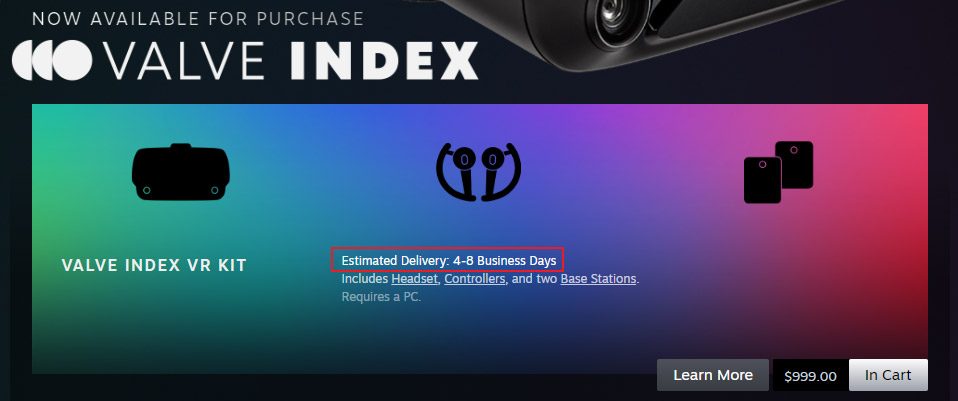
Index is sold in several packages, the ‘full kit’ (which includes the headset, controllers, and base station trackers), a kit which includes the headset and controllers without base stations, and a standalone headset kit. While all three of these packages containing the headset are immediately available for purchase, it seems that the stock of Index controllers may still be constrained, as the standalone controller package still asks customers to ‘Reserve’ an order to be later notified of availability. Meanwhile, the standalone base station package appears to be immediately available.

Original Article (July 25th, 2019): Valve announced today that the Index ‘full kit’ (which includes the headset, controllers, and base station trackers) is ready for immediate shipping in the US. At launch, the $1,000 full kit was quickly backordered and wasn’t estimated to ship until the end of September; the company said that “initial quantities were outpaced by demand.”

The other SKUs (the headset and controllers without base stations, and individual packages of the headset, controllers, or base stations) were also backordered so far that Valve eventually stopped taking orders or offering an estimated shipping date altogether and instead asked customers to reserve their spot in line to be notified of availability. All SKUs except for the full kit and the individual base stations remain backordered with an option to reserve a spot for ordering, but Valve says they will soon have immediate availability of those as well.

Valve also expects that Index hardware will become readily available in international territories as well. Currently the headset is available in 30 countries across the US and EU (a complete list can be found here), though it isn’t clear if or when they will expand into other regions. We’ve reached out for more info.

Apparently coinciding with the increasing availability of the headset, Valve put Index front and center on the Steam store front page for all to see, with a “Get it now” call to action and a $500 advertised price (the cost of just the headset alone).

Valve said prior to Index’s launch that the headset would see a “limited initial release” to the US and EU first, and that the company would ramp up their manufacturing and expand availability based on demand; this is perhaps the first sign of that ramping process.

The post Valve Index Now Available in 31 Countries Including Canada & Japan appeared first on Road to VR.


Ream more: https://www.roadtovr.com/valve-index-shipping-update-backorder/

Thursday, November 21, 2019

Source 2 Tools Will Ship with ‘Half-Life: Alyx’ for VR Content from the Modding Community

Half-Life: Alyx is due to launch in March 2020; alongside it, Valve plans to release tools for its Source 2 engine which will let community creators build more VR content for the game and beyond.

Modding has long been a major part of Valve and Half-Life, the company has not only explicitly sanctioned modding of its works but over the years has released tools and distribution channels to help players make, find, and play community made content.

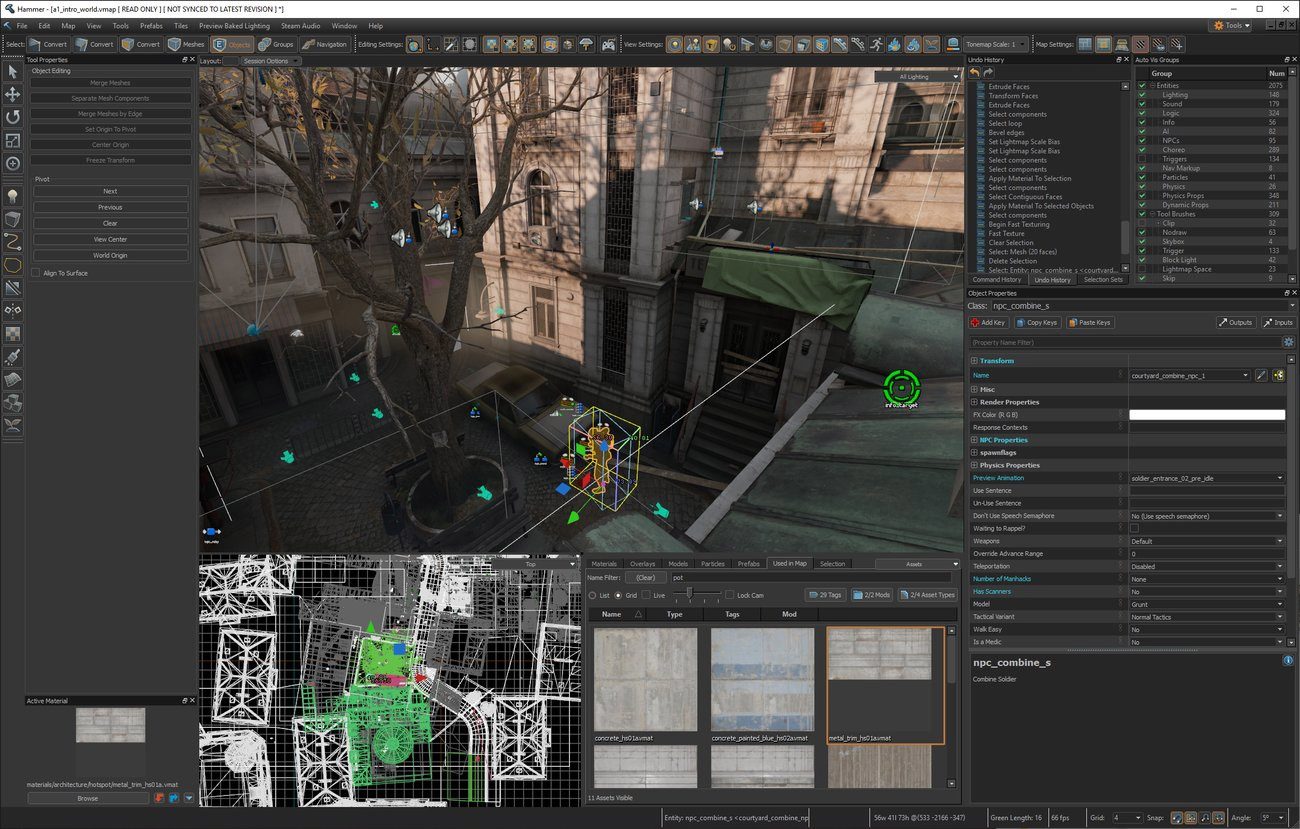
Half-Life: Alyx will be no different. Valve today announced that “a set of Source 2 tools for building new levels will be available for the game, enabling any player to build and contribute new environments for the community to enjoy.” ‘Hammer’, the studio’s level authoring tool, has been “updated with all of the game’s virtual reality gameplay tools and components.”

‘Hammer’, Valve’s level editor | Image courtesy Valve

Community-made content can be hosted via Steam Workshop, the mod distribution component of the Steam platform.

This is a bigger deal than just new weapon or enemy skins; major titles like Counter-Strike, DOTA 2, Team Fortress 2, and Day of Defeat, all started their lives as mere mods. With tools available for community modders to try their hand at making new VR content, the potential exists for great ideas to bubble up and spawn significant games.

The post Source 2 Tools Will Ship with ‘Half-Life: Alyx’ for VR Content from the Modding Community appeared first on Road to VR.


Ream more: https://www.roadtovr.com/half-life-alyx-source-2-modding-tools-hammer-vr/

‘Half-Life: Alyx’ Trailer Revealed, Release Date Set for March 2020

Valve today announced Half-Life: Alyx a “full-length VR entry in the award winning series.” A new trailer gives the first glimpse of the game, and Valve has also revealed the Half-Life: Alyx release date, price, and headset compatibility. 

Half-Life: Alyx is one of three VR games that the famed developer has been quietly toiling away on for the last several years. A trailer revealed today gives the first look at what Valve plans to unleash as both the company’s first full-fledged VR game and the first Half-Life game in 12 years.

Half-Life: Alyx Trailer

Half-Life: Alyx is set between the events of the original Half-Life (1998) and Half-Life 2 (2004). 

“Alyx Vance and her father Eli secretly mount the resistance to the brutal occupation of Earth by a mysterious alien race known as The Combine. As Alyx, players take the fight to the Combine to save the future of humanity,” Valve said in today’s announcement. “Half-Life: Alyx was designed from the ground up for Virtual Reality and features all of the hallmarks of a classic Half-Life game: world exploration, puzzle solving, visceral combat, and an intricately woven story that connects it all with the characters iconic to the Half-Life universe.”

More of Today’s Half-Life: Alyx News

Half-Life: Alyx Supported VR Headsets

Half-Life: Alyx is exclusive to VR, but Valve has affirmed that it will run on all SteamVR headsets. That covers every major PC VR headset on the market including Valve’s own Index, as well as Rift, Vive, Cosmos, WMR, and Pimax.

Half-Life: Alyx Release Date and Price

Image courtesy Valve

The company had announced earlier this year that the game would ship in 2019, but as of today it has delayed the title; the Half-Life: Alyx release date is March 2020. The game is available for pre-purchase today and priced at $60; Valve plans to give the game away for free to all owners of the company’s Index headset.

The post ‘Half-Life: Alyx’ Trailer Revealed, Release Date Set for March 2020 appeared first on Road to VR.


Ream more: https://www.roadtovr.com/half-life-alyx-vr-trailer-release-date-price/

Valve’s Gabe Newell: ‘We’re excited to return to Half-Life, VR has energized the studio’

Half-Life: Alyx has finally been revealed with Valve promising a “full-length” Half-Life game “designed from the ground up for virtual reality.” On the reveal, Valve founder Gabe Newell says that VR has energized the studio.

In an announcement from Valve today, the company’s prominent but often spotlight-shy founder, Gabe Newell, painted Half-Life: Alyx as an important moment for the company.

“Everyone at Valve is excited to be returning to the world of Half-Life. VR has energized us. We’ve invested a lot of ourselves in the technology. But we’re also game developers at heart, and to be devoting ourselves to a VR game this ambitious is just as exciting. For that to come in the form of Half-Life feels like the culmination of a lot things we care a lot about: truly great games, cutting edge technology, and open platforms. We can’t wait for people to experience this.”

More of Today’s Half-Life: Alyx News

Valve hasn’t released a full-length single player game since 2011’s Portal 2; the game will also be the first entry in the Half-Life series in 12 years, with the last being Half-Life 2: Episode 2 released in 2007. In that way, Half-Life: Alyx is a return to form for the company which has created some of the top single player games of the past two decades.

While it isn’t the greatly anticipated conclusion to the trilogy (instead set between the original Half-Life and Half-Life 2), the company isn’t shying away from the game being a full-blown part of the universe, calling the game “a full-length virtual reality entry in the Half-Life universe.”

“Half-Life: Alyx was designed from the ground up for virtual reality and features all of the hallmarks of a classic Half-Life game: world exploration, puzzle solving, visceral combat, and an intricately woven story that connects it all with the characters iconic to the Half-Life universe,” the company said in an announcement today.

The post Valve’s Gabe Newell: ‘We’re excited to return to Half-Life, VR has energized the studio’ appeared first on Road to VR.


Ream more: https://www.roadtovr.com/gabe-newell-half-life-alyx-valve-energized/

At $600K, Tundra Tracker Smashes Kickstarter Goal in Less Than 24 Hours

Tundra Tracker, the SteamVR Tracking tracker in development by Tundra Labs, has well exceeded its $250,000 Kickstarter goal in less than 2...