Wednesday, January 13, 2021

For a Veteran Studio That’s Weathered the Storm, VR Has Become a Lucrative Business

Having started production on its first title even before the original Oculus Rift DK1 development kit was sent to developers, Canada-based Cloudhead Games is one of the world’s most veteran game studios dedicated to virtual reality. The studio has staked its very existence on its ability to build compelling VR games. With three prior games under its belt, Cloudhead poured its hard-won expertise into its latest, Pistol Whip, which has propelled the studio new levels of success.

The 2016 launch of Cloudhead’s first game, The Gallery – Episode 1: Call of the Starseed couldn’t have been under more ideal conditions. The studio was among a handful of developers which received access to early to HTC Vive development hardware, allowing the game to launch side-by-side with the headset. Call of the Starseed was lauded and promoted at the launch of the Vive by Valve and HTC as one of the first VR titles to take true advantage of VR’s capabilities.

Image courtesy Cloudhead Games

Critics praised Call of the Starseed’s polish and scope as a departure from other early VR titles which felt more like demo games. In the following years, Call of the Starseed and its sequel, Episode 2: Heart of the Emberstone (2017), would see regular mentions in discussions of top VR games.

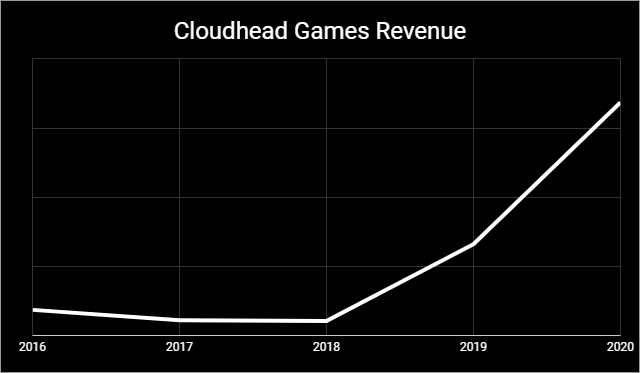
Despite the praise and momentum, the success of Cloudhead’s latest title, Pistol Whip (2019), has positively dwarfed what the studio earned from its early entries in VR.
Data courtesy Cloudhead Games

On top of this exclusive look at the studio’s relative revenue, Cloudhead also shared that its sales in December 2020 were up 60% over December 2019. Further, the number of users that have played the studio’s games increased by 131% from 2019 to 2020.

Cloudhead CEO Denny Unger tells Road to VR that Pistol Whip’s success has come from both by a growing VR market and a major pivot in the studio’s approach to VR design, which was driven by Cloudhead’s hard-won VR expertise and the frightening state of VR in 2018—when the studio came uncomfortably close to being forced to abandon VR altogether.

The Storm

Art promoting Pistol Whip’s ‘2089’ update | Image courtesy Cloudhead Games

“2018 was a really terrible year for VR. Most of the major OEMs were waffling on what they were going to do, the [performance] numbers weren’t great, a lot of our peers were closing up shop […]. That [period] coincided with a bunch of decision making about what our next project would be,” he said.

“We had a really short [financial] runway at that time and we had to look at what was working on market. We knew it had to be accessible. It had to be really easy to share and compete with friends. You had to look good while playing it—we thought about how influences would look while playing it. It had to have high replayability, it needed to be a games-as-a-service model, and, really importantly, it had to be targeted toward the Quest.”

Pistol Whip was thus conceived and launched, at a pivotal moment for Cloudhead and the industry as a whole.

“At this time we knew three things: we knew Quest was coming, we knew that Valve Index was coming, and we knew that Half-Life: Alyx was coming. […] if those three things did not drive a turning point in the VR market, then nothing would. And at that point then we would have to pivot away from VR.”

The turning point the studio was betting on finally came, largely driven by Quest in 2019 and bolstered further still by Quest 2 in 2020. In relatively short order, the studio has gone from staring down the end of its financial runway to laying down strategic plans years into the future.

“This, to me, is definitely a turning point in the market—a serious one—this is not a ‘maybe’ thing. It’s the first time, over the last eight years, that […] we’re now profitable to the degree that I can confidently say that we’re gonna be here for a few years,” Unger said. “And we’re a 25 person studio—that’s no small thing—I don’t actually think many VR studios can say that. We don’t have VC funding, we don’t have a board of directors, we’re completely running on our own steam. A big portion of [this success] is coming from the Quest market.”

Cracking the Code

Art featured in Pistol Whip’s ‘2089’ update | Image courtesy Cloudhead Games

A growing market is great news for all VR developers, but few apps are seeing Pistol Whip levels of success. What’s different about it?

“Retention and time played have both been really important metrics [for Pistol Whip], and we’ve seen massive spikes in that with Quest and Quest 2. People keep coming back, over and over and over again,” said Unger. “[…] Oculus made a point of letting us know how amazing that specific aspect to our game was, that it just has this really sticky quality that keeps people playing, and that it’s not slowing down.”

Compared to The GalleryPistol Whip is a radically different kind of game. Rather than a linear narrative adventure, Pistol Whip is a replayable shoot’em up which couldn’t be easier to pick up and play. Unger said that while Cloudhead still has ambitions to build the third episode of The GalleryPistol Whip was built for the needs of the VR market as it exists today.

In deciding on the pivot, the studio reasoned that the breakdown of consumer interest in various genres—shooters, platformers, simulation, strategy, narrative adventure, etc—is roughly the same in VR as it is outside of VR. So to build a VR game in a genre that’s already niche outside of VR would be building a niche in a niche—not a recipe for success.

That meant setting aside the narrative adventure of The Gallery, and picking something with wider appeal. At the same time, the studio made a conscious choice to focus on ease of use.

“[…] one of the pillars for Pistol Whip was that we want to engage the ‘lizard brain’—the reactive mind. Not the mind that has to be deeply analytical about things. And the way we do that is we put you in a situation that’s threatening, and you just react. So there’s a lot of movement that happens in Pistol Whip—physical movement—that’s just driven by these underlying subconscious systems,” Unger said. “And that was a really important breakthrough for us. Like, ‘how do we tease out people moving or behaving in this specific way’ without them even having to think about it? And I think that’s where players get a lot of enjoyment out of Pistol Whip, because they’re active, they’re moving around in the environment, and they’re only focused on shooting and survival.”

Interestingly, the realization that ease-of-use should be a key pillar actually came from fizzled business pitches between Cloudhead and Hollywood studios.

“[Development of Pistol Whip] came off the tail of doing—god I don’t even know how many—pitches with Hollywood. They were really desperately trying to wrap their heads around how they could utilize VR,” said Unger. “[…] even though most of those things fell apart—and Hollywood kind of dropped the ball on VR in general—the benefit of doing that exercise for us was that we really had to ask ourselves some tough questions about how complicated you can really make a VR experience for Joe Blow consumer. And that led us to some assumptions about about what we had to nail on Pistol Whip.”

One of those tough questions was how the game should handle locomotion. While The Gallery, and plenty of other VR games, have ported basic stick-based movement from the non-VR games that came before, Cloudhead had other plans for Pistol Whip.

“[…] one of [our key lessons] was recognizing […] that actually locomotion is something that kind of needs to ‘go away’ in VR. And I don’t mean that you stand in a room and just stand there—that’s not what I’m talking about. The cognitive load of thinking about how you have to move needs to go away,” said Unger. “[…] It should still happen in an experience, but you need to totally remove that cognitive load from the user so they can focus on the other things they’re doing in the virtual environment.”

The same concept of ‘low cognitive load’ carried into the game’s interaction design too.

“[…] this is a bit old school but, in a way I don’t like that there’s so many buttons on modern VR controllers. I actually appreciated the [trackpad on the original Vive controllers] because it forced designers to think more VR-centric… like ‘how do I make my hands do the thing in the experience [instead of using a button]’? For me it’s going back to simplified input. Again, the user shouldn’t have to think about how to do a thing. It should just be a natural organic thing that they already know how to do.”

Continue Reading on Page 2: “The True Starting Point of Modern VR” »

The post For a Veteran Studio That’s Weathered the Storm, VR Has Become a Lucrative Business appeared first on Road to VR.


Ream more: https://www.roadtovr.com/vr-lucrative-business-cloudhead-interview/

‘Synth Riders’ Music Pack Featuring Muse Gets Full Tracklist Reveal, DLC Launching Jan. 14th

Virtual reality rhythm game Synth Riders (2019) is getting a new music pack tomorrow called ‘Synthwave Essentials 2′ which is set to feature the heavy-hitting English rock band Muse. Now, developers Kluge Interactive have unveiled the full tracklist for its upcoming DLC in a Road to VR exclusive, and also sat down to talk about some of the finer points of grooving to the infectious electric beat of synthwave in VR.

Synth Riders is all about freestyle dancing, and getting into flow state as you hit incoming orbs to the beat. A unique rail system gets you stretching in every direction; it feels a bit like the neon-soaked lovechild between Thumper (2016) and Kung Fu.

Launching tomorrow, January 14th, Synth Riders Synthwave Essentials 2 Music Pack will include five paid songs, which will be available for purchase for $1.99 each, or as a bundle for $7.96 (-20%).

Check out the gameplay video here:

Headlining Synthwave Essentials 2 is “Algorithm”, Muse’s title track from their acclaimed 2018 album Simulation Theory. For the song, the studio created a new immersive level that synchronizes the game’s patently ’80s-inspired visuals to the beat, something Kluge Interactive CEO Arturo Perez told us results in “the blending of sight, sound, and movement together into a transformative VR experience.”

The game is also getting three free songs, which will arrive in an update tomorrow for all supported platforms. Synth Riders is available on SteamVR headsets via Steam and Viveport, and cross-buy between Oculus Rift and Oculus Quest. PSVR support is also coming sometime this year. More on that below.

‘Synthwave Essentials 2’ Paid Tracks

  • “Algorithm” (Alternate Reality Version) – Muse: The title track of Muse’s “Simulation Theory” is given an atmospheric, darkly symphonic treatment and combines with the included Synth Riders Experience to explore the song’s concept that we are caged in simulation.
  • “The Dark Side” Muse: The second track of Muse’s “Simulation Theory” continues to explore the struggle to escape from a dystopia with controlling technologies, from our own anxieties and from the Dark Side.
  • “Days of Thunder” – The Midnight: Like something straight out of an ’80s movie, this melodic synthwave track comes complete with a saxophone player in the back seat as you cruise along the Pacific highway.
  • “Tech Noir” (Carpenter Brut Remix) – Gunship: Taken from Gunship’s 2015 self-titled first album, this synthwave classic is given a new funk-driven uptempo push by French synthwave artist Carpenter Brut.
  • “Running In The Night” – FM-84 & Ollie Wride: A massive synthwave hit for producer Col Bennett, better known as FM-84, which pairs sparkling synths with the incredible vocals of long time collaborator Ollie Wride resulting in a modern-yet-classic ’80s soundscape.

Free Songs Arriving Jan. 14th

  • “Abyss” (Gancher & Ruin Remix) – 3FORCE (feat. Scandroid): Gancher & Ruin takes the synthwave epic from 3FORCE featuring Scandroid and twists it into a relentless EDM track that will have you moving.
  • “Empire of Steel” (MASKED Remix) – Essenger (feat. Scandroid)Essenger and Scandroid join forces in “Empire of Steel” in this remix by MASKED that takes early 80s synth pop and gives it a harder, modern EDM-and-guitars edge, all set in a cyberpunk future.
  • “Automatic Call” – NINAWith a strong bassline and shimmering synths all topped with Nina’s beautiful vocals this is a breakup song you’ll always come back to.

We also got a chance to virtually sit down with Arturo Perez, CEO and partner at Kluge Interactive, to learn a little more about what makes the studio’s love letter to synthwave tick.

Founded in 2007, Kluge Interactive is a Los Angeles-based creative agency which builds interactive experiences for a number of sectors including healthcare, B2B, and the public sector. The studio created and published Synth Riders in 2018, making it their first VR game for consumers.

You seem pretty excited about the upcoming DLC. What’s all the hubbub?

Arturo Perez, CEO of Kluge Interactive: We are very excited indeed! Synthwave was our creative inspiration in making Synth Riders to begin with, and we have seen a lot of requests for a follow-up. When we were making the game, synthwave was more of a niche, and we can’t believe how much it’s grown since then. We are proud to release a pack with classic artists such as FM-84 & Ollie Wride, The Midnight, Gunship, and Scandroid, who are all legends to us. And then there is Muse, who pulled off some legendary songs of their own in “Simulation Theory,” and we couldn’t be happier to feature two songs from that album on this pack.

This pack is special for us for one more reason. For the first time, we are launching a dedicated, playable experience for one of the songs in the pack, “Algorithm” by Muse. Rather than a stage that could be used with any song, this is a unique, artistically-driven, immersive visual feast, perfectly synchronized with the song, that results in the blending of sight, sound, and movement together into a transformative VR experience. The final effect went beyond our expectations and we hope that the “Algorithm” Experience will blow the minds of many VR newcomers and let the veterans relive the “wow” factor of VR one more time.

You can really burn some serious calories playing just about any track in Synth Riders. When you set out to make the game, were you specifically targeting fitness, or was that more of a happy side effect?

Our main inspiration for the game was Thumper (2016), so the initial idea was all about making a good music game for us – VR Fitness was nowhere in our periphery. Once we had a prototype, we did realize this game could work great for dancers and fitness enthusiasts. I remember this came up in an audience exercise we did internally. But it wasn’t until our community confirmed this that we got intentional about it.

Today, we are lucky to have someone like our Product Manager Wirrel in our team, who comes with 20 years of fitness experience. We have gotten more intentional about the movements we guide our players to do, and especially in making sure that these movements are good for their bodies. For example, we know that ongoing repetition is bad for you, so we are always intentionally mixing dance and fitness patterns we insert into each song, in a way that it won’t have negative repercussions. We are also constantly QA’ing with how it feels for the body. We are thrilled that the game is widely used for fitness and dancing; what started off as a happy accident has become core to how we bring new features to the game.

Developers seem to be experiencing significant upticks in both installs and user engagement thanks to Quest 2. Is this also the case for Synth Riders?

Absolutely. The weeks before the Quest 2 seemed to be lower-than-usual for everyone we spoke to. Our numbers immediately spiked 5x the day it came out. And we are seeing another interesting spike with the new year too; it’s clear that there are more and more new headsets out there. The percentage of Quest buyers over every other platform we are on continues to grow and widen over time.

PSVR users have been waiting patiently for Synth Riders. When can we expect to start grooving on PSVR?

We are very excited to finally be coming out with PSVR this year. We don’t have an exact date yet but we can confirm that after a number of false starts, we do now have it solidly in the roadmap. Our conversations with the Playstation team have been very encouraging and we look forward to making some exciting announcements about our PSVR release in the short future.

The game’s Mario Kart-style multiplayer power-ups are my personal favorite addition as of late. Across all available modes, where do you find users spending most of their time? Why is that?

Thank you! We love power-ups, and we are continuing to work on them thanks to precious community feedback. We are having a LOT of fun with it as we believe Synth Riders is first and foremost about having fun, and even though we do have a competitive side to the game, we felt the need to bring this Kart-style approach in order to get people engaged with each other, regardless of where they are at in the game.

One of our current challenges now is that we do have a lot of different modes, and players are not always aware of them all. According to our stats and the reviews we get, the favorite seems to be Spin Mode, especially because it works across every single song in the game, including the customs, and across all levels of difficulty. Some players like to play 360 wild and some players like 180 mild. We are also especially pleased about the way this update turned out!

The game has grown a great deal since it was first released in Early Access. Any hints at cool features we can look forward to in 2021?

We don’t want to spoil too much but we can say that we are working on our own version of a Campaign mode which will be a pretty significant update for us. We are also thinking of this mode as the one to help us guide our players to really understand all of the different features that the game now has. We launched this game in Early Access in 2018 and we can’t believe how far it’s come; this also means that it’s feature-rich and we hope Campaign Mode will be a great introduction to the world of Synth Riders.

The other feature we are very excited about is “Experiences,” something we had in mind for a long time but only came to fruition with Muse’s “Algorithm” which is our first visual-to-song unique experience. We are thinking about how to allow our Community to make even more experiences for themselves, and also about the kind of music we want to work with to get even more official experiences onto the game. We can’t wait to see what we can do here, but for now, we just see a lot of exciting potential.

Final question: any favorite experiments with Synth Riders that just didn’t work out?

A lot hasn’t worked! At one point in 2019, we tried to bring additional mechanics to the game, including a way to play more with your elbows and of course with the feet. We also thought of ways to bring in shooters, something you see a little bit with our “Space Invaders” power-up. It’s not like we’ve discarded any of it, but we decided to stay focused on what really worked; primarily around a great rail experience and versatility in the way we can design patterns around our regular notes and their specials. The community has been critical for us, they keep us focused and grounded on what makes this game so special for everyone. We really try to listen to them and make it a game that is created by both of us. While at the same time we are constantly thinking of ways to push boundaries and bring our own flavor and approach to the rhythm genre.

– – — – –

Synth Riders is available for $25 on SteamVR headsets via Steam and Viveport, and features cross-buy between Oculus Rift and Oculus Quest. You’ll find the new DLC on all platforms starting tomorrow, January 14th.

The post ‘Synth Riders’ Music Pack Featuring Muse Gets Full Tracklist Reveal, DLC Launching Jan. 14th appeared first on Road to VR.


Ream more: https://www.roadtovr.com/synth-riders-vr-muse-music-pack-tracklist/

‘Doom 3’ Rips & Tears onto Oculus Quest with This Unofficial Mod

As you’d imagine, Doom 3 (2004) wasn’t built for VR. But thanks to work by consummate modders Team Beef, the iconic first-person shooter from id Software can finally be played in all its horrific goodness on Oculus Quest, replete with Touch controls. There’s a few hoops to jump through to get it working, but it’s all in the name of doom-slaying.

Simon Brown (aka ‘Dr. Beef’) released the mod in full on SideQuest this week, which lets you port the game’s original files to the newly rejiggered VR-compatible game engine.

The project doesn’t contain any of the original copyrighted assets, so you’ll need to legally own Doom 3 if you want to play on Quest or Quest 2. At the time of this writing, only the original Doom 3 works (not Doom BFG). You can grab it over on Steam for $5.

The mod itself is free, however the team is also accepting donations through PayPal.

To play, you’ll need to roll up your sleeves and get under the hood a bit. Firstly, you’ll need to set up SideQuest for either your original Quest or Quest 2. Check out our guide on how to install SideQuest to get started.

From there, follow this step-by-step guide on the Doom 3 Quest website, which requires you to copy a few PK4 files from the installed Doom 3 game folder on your PC to the relevant SideQuest folder.

Team Beef says multiplayer isn’t available yet, however it’s not off the table.

“There is a possibility [multiplayer] may come later, but is however a lot of work,” the team says. “The networking code changed hugely from Doom 3 to BFG. Once this is stable and released we can review our options.”

Considering the team brought to SideQuest Return to Castle WolfensteinQuake, Quake 2, Doom, and Half-Lifeit’s hard to think of a more capable group up to the job.

– – — – –

If you have a PC VR headset, you won’t be able to play this specific mod, although there are others out there. Team Beef suggests downloading the ‘Fully Possessed Mod’ on Github to get you chainsawing and ripping through Hell’s ugliest baddies.

The post ‘Doom 3’ Rips & Tears onto Oculus Quest with This Unofficial Mod appeared first on Road to VR.


Ream more: https://www.roadtovr.com/doom-3-oculus-quest-2-mod/

Tuesday, January 12, 2021

Panasonic Reveals Improved Specs for Its Impressively Compact VR Glasses

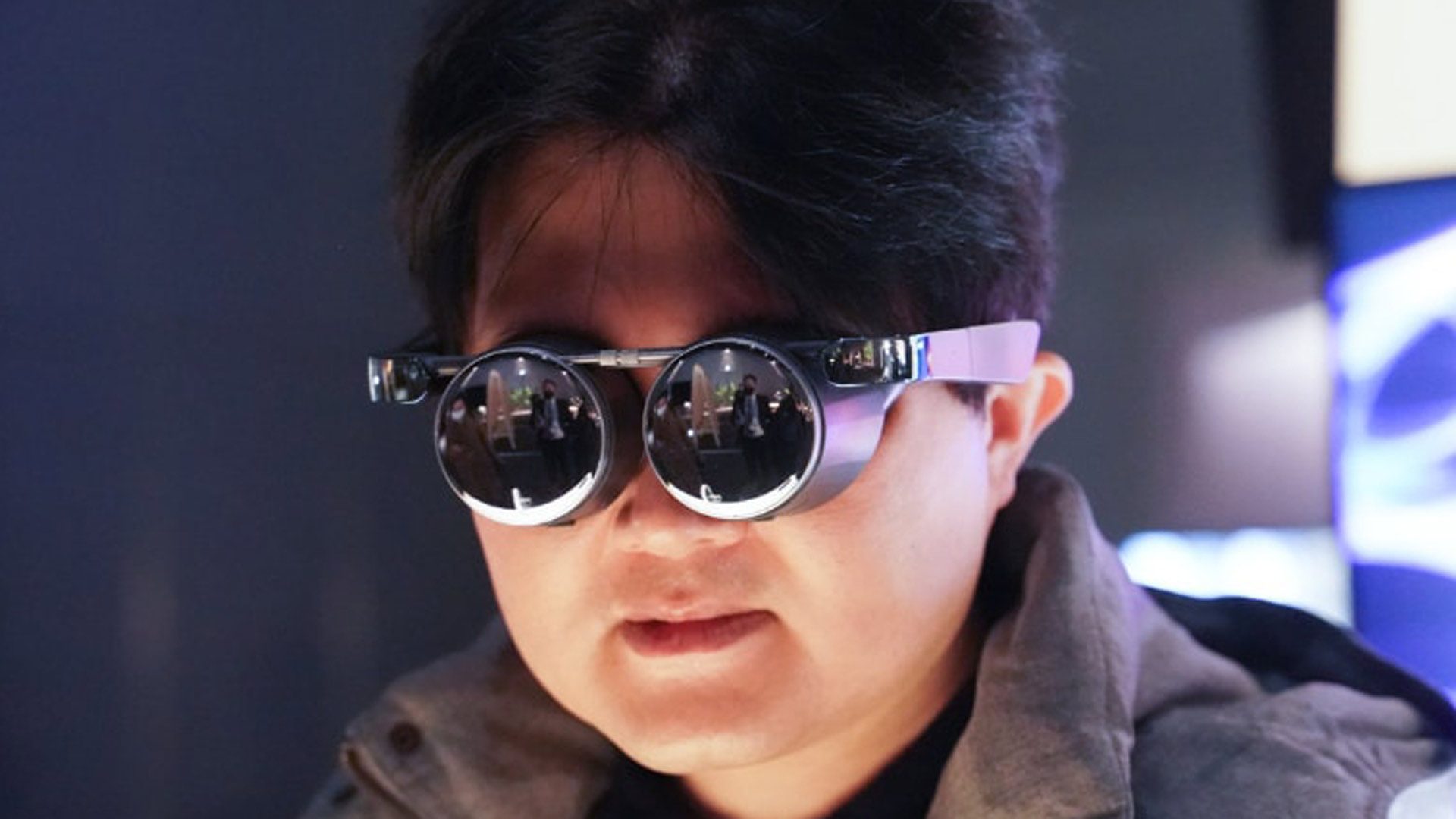
At last year’s CES, Panasonic unveiled a prototype of a pretty sleek pair of VR glasses. Only a few journalists got a chance to try the prototype then, noting that they were more akin to a ‘VR viewer’ since they lacked room-scale tracking and was primarily used for watching immersive video whilst tethered to a PC. At this year’s all-digital CES 2021, Panasonic showed off a new and improved version of the device, which packs in some pretty intriguing specs alongside the new addition of optical 6DOF tracking.

Japanese publication AVWatch got a chance to go hands-on with the new headset at an invite-only reveal concurrently held in Japan—something that wasn’t possible at CES due to the ongoing pandemic.

Although there’s no onboard computing or power—it connects to either 5G Android smartphones or PCs via a USB-C cable—it appears Panasonic is actively fleshing out the sleek little headset’s specs to appeal to consumers looking for a lightweight tethered option. It’s also said to work with SteamVR, which means users could hypothetically play games and connect via social VR platforms like Rec Room or Bigscreen.

Image courtesy AVWatch

As for specs, last year’s prototype boasted ultra high definition (UHD) resolution, which means it was likely a total of 4K resolution split between two displays. AVWatch notes that this year’s model features dual 2,560 × 2,560 micro OLEDs with a pixel density 2,245ppi.

The micro OLED panels, which were developed in collaboration with Panasonic and Kopin, are said to support 120Hz as well as HDR. Much like Pico’s G3 prototype, which hasn’t been released yet, Panasonic’s aptly names ‘VR Glasses’ also feature pancake optics, which reduce the overall bulk and weight of the device.

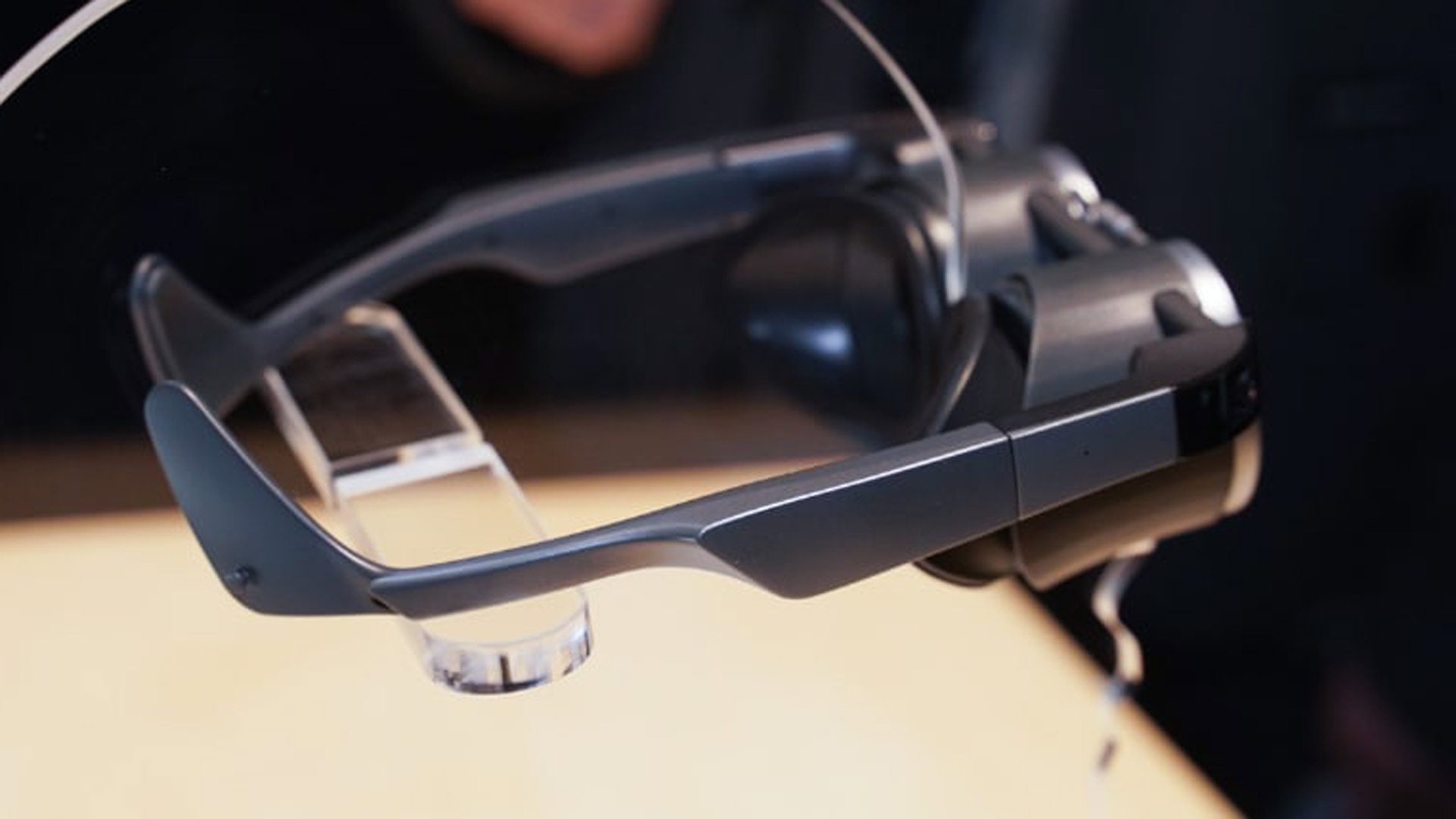
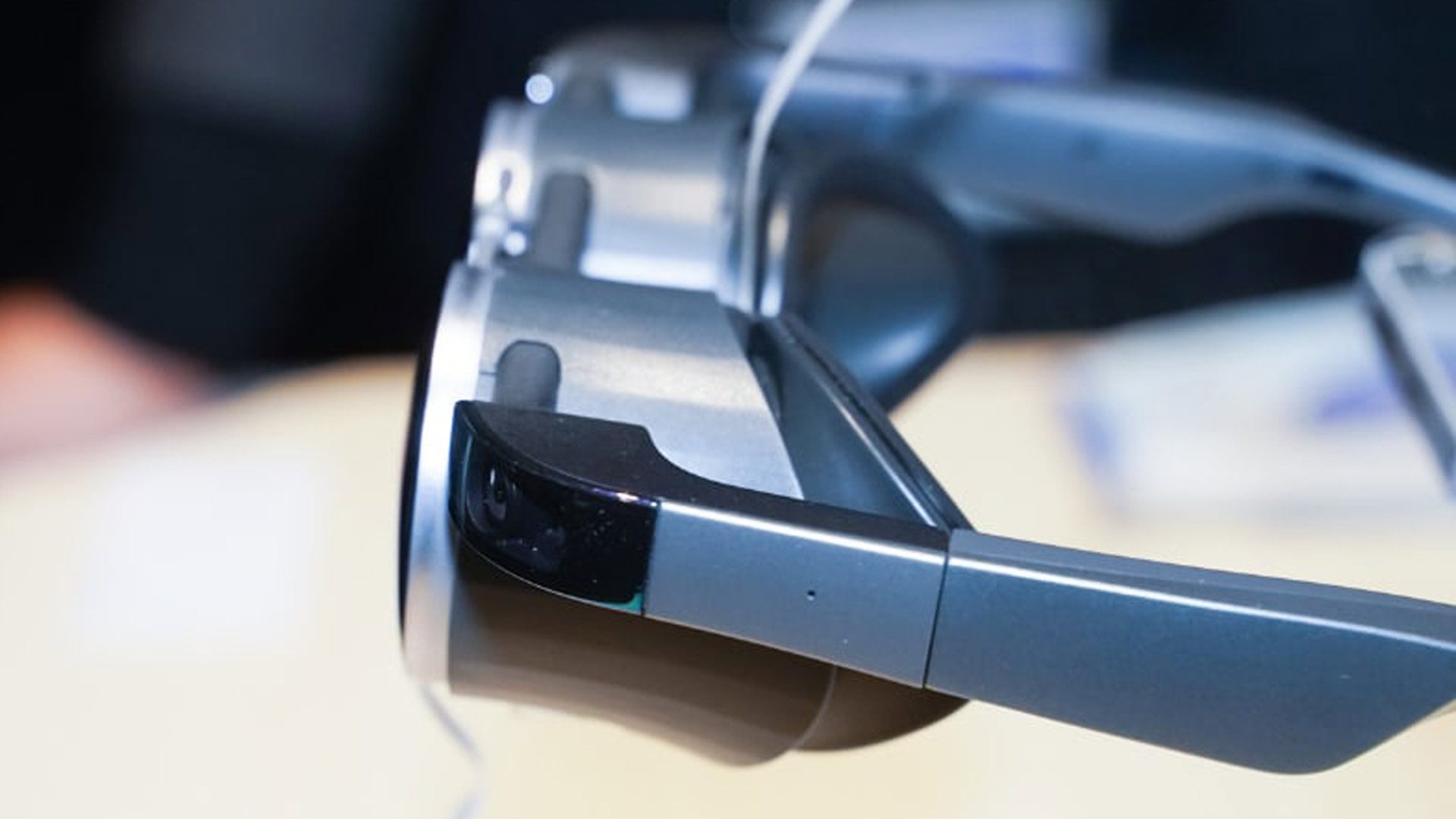
Beyond its basic functionality, there were a few concerns about last year’s prototype, namely its inherently front-heavy design, which made it particularly easy to slip off the nose. AVWatch notes that this year’s model has better weight distribution by both strengthening the device’s arms and improving the shape of the fins to better grip to the user’s head.

Image courtesy AVWatch

Audio is another area of improvement for the prototype, which now features integrated audio built by Panasonics’ subsidiary Technics instead of the previous design’s dangling earbuds. Panasonic didn’t comment on the exact implementation, however it sounds very similar to the way Oculus provides onboard audio in Oculus Quest and Oculus Go.

The VR glasses also include both IPD (interpupilary distance) adjustment and a diopter adjustment mechanism to accommodate near-sighted users—important features to have for such a close-fitting VR headset.

Image courtesy AVWatch

There’s still no clear price or release date in sight. Granted, it’s hard to say whether VR headsets necessarily need to ship out to consumers so quickly though. Microdisplays and pancake optics tend to provide lower field of view (FOV) than dedicated PC VR headsets or standalone devices like Oculus Quest 2, which typically range at or above 100 degrees. This year’s model still doesn’t have a verified FOV spec, but if it’s anything like last year’s it will likely be somewhere around the estimated 70 degrees.

Still, Panasonic’s VR Glasses are an amazing peek at what the near future could bring. Economies of scale could one day reduce the cost of high resolution microdisplays and custom pancake VR lenses, making a tiny pair of 6DOF specs a cheap and cheerful option among a growing sea of VR tech.

The post Panasonic Reveals Improved Specs for Its Impressively Compact VR Glasses appeared first on Road to VR.


Ream more: https://www.roadtovr.com/panasonic-vr-glasses-specs-ces-2021/

‘Bigscreen’ Brings ‘Rick & Morty’, ‘The Eric Andre Show’ & More to Free TV Selection

Bigscreen, the social viewing platform for VR headsets, just launched a number of new free TV channels including Rick and Morty, Aqua Teen Hunger Force, Samurai Jack, Robot Chicken, The Venture Bros, and The Eric Andre Show.

Bigscreen first added its TV livestream back in July 2019, which at the time brought over 50 channels to the free app. With its recent additions, users can now select from 172 channels—all of which are available for free in public rooms. Some channels are region-specific, but a majority can be viewed from anywhere.

“Today’s new TV channels all have an age restriction on it, requiring users to consent that they are 18 or older before entering,” the studio says in an update. “Bigscreen’s built-in Parental Controls also allow parents to prevent their children from entering any of these 18+ rooms, public rooms, or social situations.”

Besides being able to chat with others face-to-face, Bigscreen also lets users rent 3D movies, watch your own local media through its internal video player, and mirror your desktop into a room—letting you watch and share practically anything you want in VR.

The studio says there’s plenty of new features coming down the pipeline for 2021 too. A Friends System is still in the works along with built-in YouTube support, and the ability to make private TV-viewing rooms. The studio is also set to roll out new servers which it says will “dramatically improve the video/audio streaming quality.”

Something users have been asking for a while now is a Remote Desktop feature, which will allow you to stream your Windows desktop to Quest. Thankfully, that’s also slated to arrive sometime in 2021.

The update is now live across all supported platforms which includes SteamVR, Oculus Rift, Oculus Quest, and Oculus Go.

The post ‘Bigscreen’ Brings ‘Rick & Morty’, ‘The Eric Andre Show’ & More to Free TV Selection appeared first on Road to VR.


Ream more: https://www.roadtovr.com/bigscreen-vr-free-tv-rick-morty/

Monday, January 11, 2021

‘Rec Room’ Now Has Over 1 Million Monthly Active Users

It was only a month ago when social VR platform Rec Room reported it crossed the two million annual VR user mark, an important milestone worth celebrating along the app’s five-year journey. Its developers tell Road to VR that Rec Room has seen a significant uptick in users recently, as it now reports over one million monthly active users on the platform.

Rec Room’s success comes from a number of factors; it’s free, it benefits from wide distribution VR headsets and traditional monitors, and it includes cross-platform play too. It’s also incredibly fun. Rec Room not only lets you socialize face-to-virtual-face, but it focuses on providing compelling games such as its co-op Quests, a battle royale-style shooter, and a host of minigames. The admittedly slick first-party content sits right alongside stuff created by the community too, which includes anything you can imagine.

In addition to supporting all major VR headsets, Rec Room has broadened the number of compatible non-VR devices since its launch in 2016. It now supports non-VR users across PS4/PS5, Steam, iOS, and Xbox, where it’s currently listed as the number one top free game.

Shawn Whiting, Rec Room’s Head of Community, Retention and Growth, told Road to VR that given today’s news, virtual reality users are actually a relatively small percentage of overall users. They are remarkable dedicated though, Whiting tells us, and they’re still growing.

“Our VR daily active users spend an average of 2.7 hours in Rec Room when they visit,” Whiting tells Road to VR. “Quest 2 is about half of our VR users [and] VR growth has been amazing the past few months.”

Still, despite its increased popularity on non-VR devices, Whiting says that creating a thriving VR community is still key to “building the metaverse.”

And by all accounts, that’s what Rec Room is really after—making a rich virtual environment where not only fun and games can exist, but also someplace where life happens. The studio’s plan to create a functioning in-game economy is only one such step, which could make it financially viable to work as a content creator for the game. That’s a good way of mobilizing creators to make cool stuff and retain users who want to spend money on accessories and exclusive content.

Besides bumping past one million monthly active users, over the weekend the platform reports it’s hosted 45,000 concurrent players, which at its peak made it more populous than many of Europe’s micronations, such as the Principality of Monaco, Liechtenstein, or San Marino. Ok, that’s a bit of a silly comparison, but no more silly than completely recreating Among Us in VR.

The post ‘Rec Room’ Now Has Over 1 Million Monthly Active Users appeared first on Road to VR.


Ream more: https://www.roadtovr.com/rec-room-1-million-monthly-active-users/

Lenovo Reveals ThinkReality A3 Lightweight AR Glasses for Enterprise

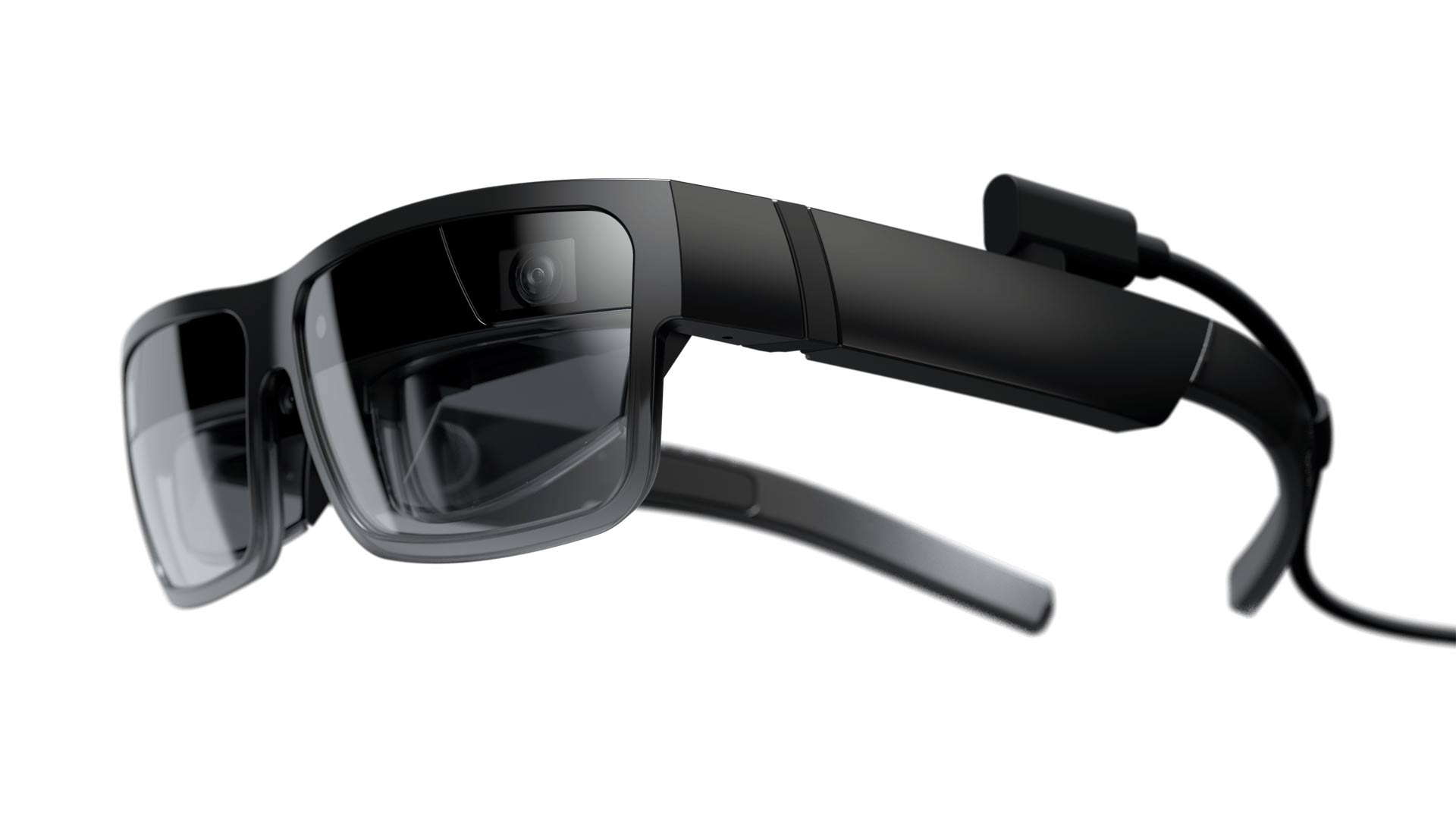
During the all-digital version of CES 2021 this year, Lenovo has officially unveiled its ThinkReality A3 augmented reality glasses, which is said to work with PC and select Motorola smartphones via a USB-C cable.

We first got an unofficial glimpse of the AR glasses in mid-December when leaker ‘WalkingCat’ published a number of unverified photos of the headset. Now the company has detailed a few of the things that were previously only subject to speculation.

In short: the company is putting out a lighter, more ergonomic pair of AR glasses for business users sometime in mid-2021. Lenovo says use cases for ThinkReality A3 include using virtual monitors, viewing 3D objects, and immersive training.

Image courtesy Lenovo

The AR glasses are powered by a Qualcomm Snapdragon XR1 which drives stereoscopic 1080p displays, something the company says can show “up to 5 virtual displays” for greater and work productivity and for situations when users need private access to displays. A single 8MP RGB camera provides 1080p video for remote expert training, and dual fisheye cameras provide room-scale tracking.

It’s being offered in two varieties, a ‘PC Edition’ and an ‘Industrial Edition’, the latter of which includes more durable industrial frame options.

Lenovo confusingly calls the device ‘smart glasses’ in promotional material, however since it features room-scale tracking and immersive displays, it’s decidedly more on the augmented reality end of the spectrum. Find out where the confusion lies in our breakdown of smartglasses and AR headsets.

As for device compatibility, Lenovo says its virtual displays are “optimized and compatible with Lenovo’s leading ThinkPad laptops and mobile workstations powered by Intel and AMD Ryzen processors.” The company further says ThinkReality A3 shares compatibility with Motorola smartphones using a Qualcomm Snapdragon 800 series processor or better, and DisplayPort capability.

Although we previously speculated that the new ThinkReality A3 included waveguide-based optics, the company confirmed with Road to VR that they are indeed bird bath-style optics similar to those seen in Nreal Light. Birdbath optics include spherical mirror/combiners that are typically much cheaper to manufacture than waveguides, but are also less bright than waveguides.

The enterprise-focused device doesn’t have a price tag yet, however Lenovo says ThinkReality A3 will be available in select markets worldwide starting mid-2021, so we may learn more soon in the next few months.

The post Lenovo Reveals ThinkReality A3 Lightweight AR Glasses for Enterprise appeared first on Road to VR.


Ream more: https://www.roadtovr.com/lenovo-thinkreality-a3-ar-smart-glasses/

At $600K, Tundra Tracker Smashes Kickstarter Goal in Less Than 24 Hours

Tundra Tracker, the SteamVR Tracking tracker in development by Tundra Labs, has well exceeded its $250,000 Kickstarter goal in less than 2...