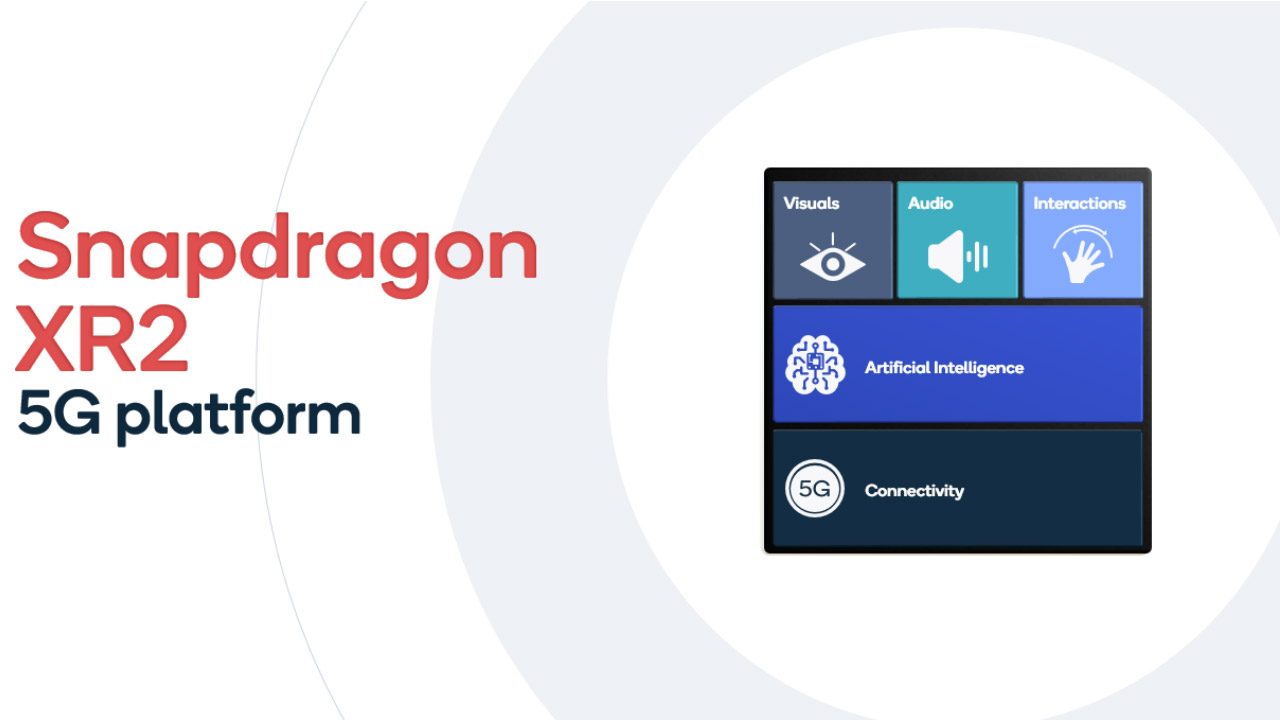
Qualcomm today announced Snapdragon XR2 5G, its latest chipset platform dedicated to the needs of standalone VR and AR headsets. The new platform is aimed at high-end devices with support for 3K × 3K displays at 90Hz, along with integrated 5G, accelerated AI processing, and up to seven simultaneous camera feeds for user and environment tracking.
Qualcomm is the name when it comes to the guts which power standalone AR and VR headsets. The company’s chipset can be found in leading standalone headsets like Oculus Quest, Go, Vive Focus, HoloLens 2, Lenovo Mirage Solo, and plenty more.
For the most part, these devices have adopted chipsets that were originally designed for smartphones, but in 2018 Qualcomm introduced the Snapdragon XR1, it’s first chipset specially made for AR and VR headsets.
Image courtesy Qualcomm
Today the company is introducing the latest iteration of that chipset, the Snapdragon XR2 5G. While XR1 was made for low-end devices, XR2 5G targets high-end standalone headsets, making it a candidate for Oculus Quest 2, Magic Leap 2, and similar next-gen devices.
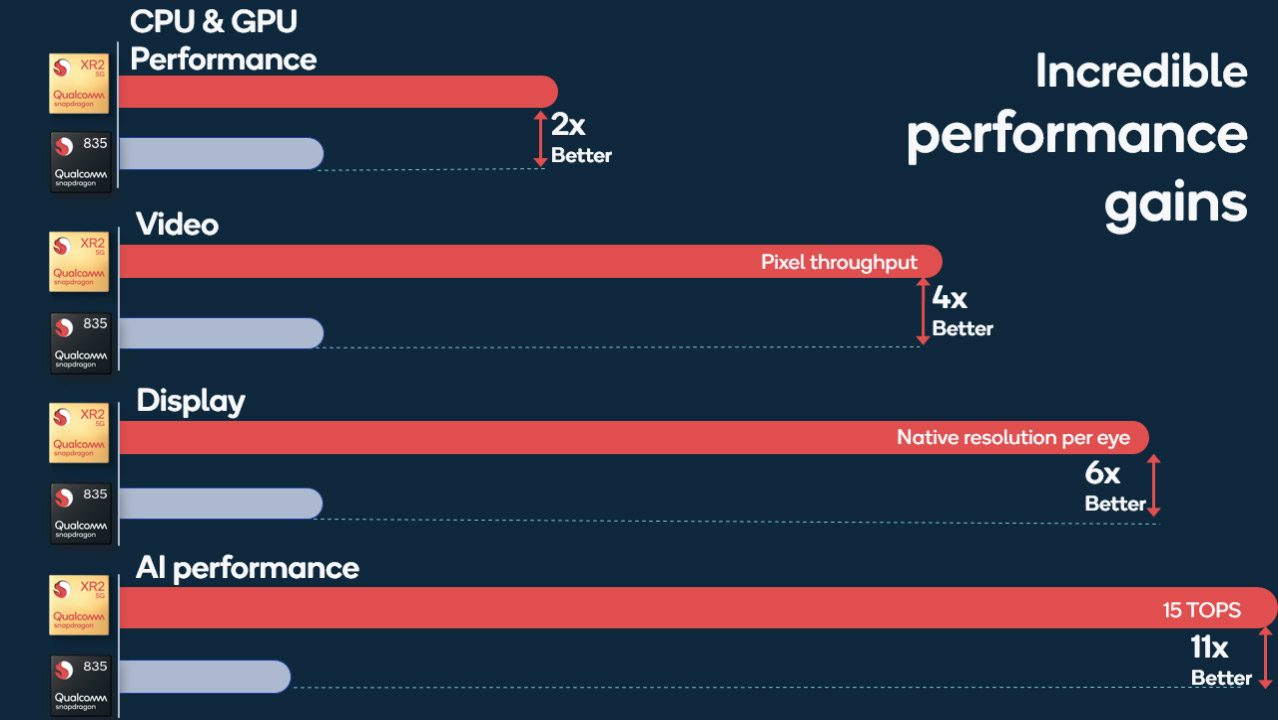
XR2 offers up notable improvements over Snapdragon 835 (one of the most common chipsets found in current standalone headsets, including Quest); Qualcomm claims 2x performance in CPU & GPU, 4x increase in pixel throughput for video playback, and up to 6x resolution per-eye compared to Snapdragon 835—supporting up to 3K × 3K displays at 90Hz.
Image courtesy Qualcomm
That’s all pretty much par for the course in terms of the kinds of improvements you’d like to see from one generation of chipset to the next, but with XR2, Qualcomm is increasingly tuning the platform for the needs of AR and VR headsets specifically.
Notably, XR2 supports up to seven simultaneous camera feeds (up from four in prior platforms). This is key for advanced tracking, both of the environment and the user. Oculus Quest, for instance, uses four cameras to track the position of the headset and controllers. The option for three additional camera feeds opens the door to additional cameras for eye, mouth, or even leg tracking. And let’s not forget the host of benefits that eye-tracking can unlock.
Qualcomm also says that XR2 offers low-latency pass-through video which could improve the pass-through video experience on headsets like Quest, and potentially enable a wider range of pass-through AR use-cases.
Additionally XR2 boasts significantly accelerated AI processing; 11x compared to Snapdragon 835, which could greatly benefit the sort of operations used for turning incoming video feeds into useful tracking information.
Credit where credit is due: Qualcomm identified the XR segment early on as something worth investing in, and they’ve kept at it. With the announcement of XR2, it’s clear that Qualcomm believes that XR is destined to become a huge market and the company aims to play a major role in it.
“Competitors are not coming close to our commitment in XR,” said Hugo Swart, Qualcomm’s VP of XR, in a briefing call with Road to VR.
In Q1 2020, Qualcomm plans to introduce the latest version of their XR reference headset based on XR2, which the company offers up as a blueprint for headset makers through its HMD Accelerator Program. Qualcomm expects that the first commercial headsets to launch with XR2 will come in the second half of 2020.
Algonside XR2, Qualcomm plans to continue to offer the existing XR1 chipset to cover lower-end XR headsets.
Thanks to Steam’s hardware agnostic approach, it’s become the defacto repository of all things PC VR (excluding Oculus exclusives, of course). Every major PC VR headset is supported through the SteamVR platform, including Oculus Rift, HTC Vive, Valve Index, Pimax, and Windows VR headsets; not to mention Oculus Quest, which thanks to Oculus Link lets you play PC VR games from the Oculus Store, Steam, and Viveport.
So you may be wondering, what are the best VR games for SteamVR headsets that came out this year? You may find a couple repeats from our 10 Best Rift Games of 2019, but there’s still plenty of top-scoring games to dig into here. Now, in no particular order, our top 10 best games for SteamVR headsets.
Note: Below you’ll find links pointing to Steam and Viveport, as the latter also offers support for many of the major VR headsets.
The 10 Best SteamVR Games of 2019
Fujii
Funktronic Labs describes Fujii as “magical, musical hike through lush, chromatic VR wilderness,” and even though this little escape from the daily grind is more of a chill gardening sim than your standard game, it’s one of those games that will have you coming back, even if you’re not sure why.
Road to VR’s Ben Lang calls Fujii’s lack of instructions “a testament to the intuitive VR game design skills of developer Funktronic Labs,” noting that players learn to interact with the world almost exclusively by doing, exploring, and testing the limits of the world in way that makes it a truly unique and personal experience. Check out why we gave Fujii an [8/10] in our review.
Pistol Whip
It feels like Cloudhead Games took a slice of Beat Saber (2018), a little dusting of Smash Hit (2015), a few shards of SUPERHOT VR (2017) and mixed it all together to create Pistol Whip, a VR rhythm shooter that engages your body in a very unique and compelling way.
You’re constantly moving forward through a levels where enemies appear and shoot at you, and it’s your job to not only return fire, but dodge incoming bullets too. Flow state is the name of the game here (ok, it’s Pixel Whip, but you know what I mean), and although we are still technically waiting for more music to fill out its 10-song library, it’s a game you’ll be able to pick up easily but have a hard time mastering. Check out our preview to learn more about why we like it so much.
AUDICA
VR and music clearly go great together, so Guitar Hero series creator Harmonix released Audica to tickle our brains, a rhythm shooter that’s attempted to tap into the success of Beat Saber by tossing a little bit of Space Pirate Simulator in there for good measure; here you’ll need to focus on timing, accuracy, and hitting those shot combos.
It got off to somewhat of a rocky start during its Early Access period, but Harmonix has managed to refine it for its full release, garnering it a ‘Very Positive’ rating on Steam and a full [5/5] on Viveport.
Until You Fall (Early Access)
Until You Fall arrives to us from Schell Games, the studio behind the super successful VR puzzler I Expect You to Die (2017), making this hack-and-slash melee adventure a bit out of left field for the studio.
Nonetheless, it offers up what Road to VR’s Ben Lang calls “a surprisingly rich combat experience which successfully fuses meta-game elements in a way that no other VR title has yet managed.” It’s still in Early Access, so we haven’t given it a score in our EA review; if we had to, it would certainly be high up there.
Trover Saves the Universe
Justin Roiland has creatures living in his brain, and his head will explode if they don’t come out. Anyway, that’s at least some explanation for the co-creator of Rick and Morty creating this ludicrous 3D platformer for VR and flatscreens. Trover Saves the Universe uses gamepad, but we don’t hold that against it.
Although we haven’t officially reviewed Trover Saves the Universe, it’s a remarkably fun game that definitely justifies its crude humor with solid gameplay, as it’s currently sporting an ‘Overwhelmingly Positive’ user rating on Steam.
No Man’s Sky (New VR Support)
With No Man’s Sky (2016), Hello Games has gone the full hero’s journey. With one of the biggest hype cycles for an indie studio to weather, the worst releases in video game history, and nary a sign of a light at the end of the tunnel, No Man’s Sky easily could have slunk away into the darkness, never to be heard from again. Instead, Hello Games persevered and ardently improved No Man’s Sky, eventually even adding VR support with its free ‘Beyond’ update.
Its VR support didn’t exactly wow us when it first released; Road to VR contributor Gabriel Moss called it “a wonderful, deeply flawed space odyssey,” giving it a still pretty respectable [7.5/10]. Quality of life updates have gone a long way of keeping us coming back for more since it first launched though—Bethesda could learn from.
Vacation Simulator
Job Simulator (2016) wasn’t an easy act to follow, considering it was likely people’s first VR experience when it arrived as a launch title on basically all VR headsets. No fear though, because the owls at Owlchemy Labs hashed out a slightly new direction with its more relaxed little bro, Vacation Simulator, which includes a story line, a more open environment and a ton of vacation-style activities to explore and play.
Some fans of the original may not exactly gel with the new direction Vacation Simulator takes, but we’re willing to bet many people will have a blast going through the gads of activities. Anyway, we did, which is why we gave it a resounding [8.8] in our review.
Angry Birds VR: Isle of Pigs
Angry Birds in VR? Pffft. That sounds lame! But no! It’s actually really fun, and not at all a diseased microtransaction-riddled mess like its mobile forbears have become. Here, Angry Birds VR: Isle of Pigs actually hits on some seriously fun gameplay by letting you not only knock down complex creations overrun by evil little piggies, but now you can even make your own block fortresses in creative mode.
Angry Birds just works in VR thanks to an intuitive shooting mechanic and a good mix of difficulty levels, which were big factors in why we gave it a [8.5/10] in our review.
Five Nights at Freddy’s VR: Help Wanted
Five Nights at Freddy’s in VR could have been a mediocre port; after all, not every developer is great at recreating their flatscreen game for VR. But that’s where Steel Wool Studios shines, as the jump-scare-tastic horror game was recreated specifically for VR headsets, which includes classic levels and original mini-games.
Sporting an ‘Overwhelmingly Positive’ rating on Steam, FNaF VR really taps into what makes horror games work in VR; let’s just say you’re guaranteed to get caught by a shrieking animatronic monster, so savor that quiet sense of dread you feel before the neighbors eventually come knocking due to all the screaming.
Acron: Attack of the Squirrels!
Local couch co-op isn’t dead, at least not when you have a couple of friends with smartphones and a VR headset. Resolution Games tosses one VR headset-wearing user into the game to take the mantle of a giant tree who needs to guard his golden nuts (seriously) while smartphone-clad players run in, building bridges, tunneling, setting up cover, and causing havoc as they use teamwork to steal all the nuts.
It feels like Resolution Games took a bit of a gamble with Acron: Attack of the Squirrels, and it also didn’t really get the recognition it deserved simply because it’s a multiplayer game that basically requires you to already have a room full of people willing to play video games—not an easy task after you turn 30. Although it’s only rated as ‘Positive’ on Steam, you definitely shouldn’t sleep on this awesome party game.
Don’t own a PC VR headset? We’re going through all major VR platforms and rounding up the best games from this year, so check back soon!
First launched on PC VR headsets back in March, indie studio Vitruvius VR is only a few weeks away from bringing its medieval melee adventure Shadow Legend VR (2019) to PSVR.
Shadow Legend is now set to launch on PSVR on January 21st, 2020, and will be priced at $25.
The game heavily features combat with swords, bows, and mage-based attacks, meaning users will need PS Move controllers to play. Movement Options are said to include free locomotion, teleport, snap-turning, and smooth turning. Vitruvius is the same team behind RPG platformer Mervils: A VR Adventure (2016).
Its initial launch on PC didn’t go without complaint however, which developer Blake Stone says in a Reddit thread was primarily due to the length of the game. The Ontario, Canada-based team has spent the better part of a year adding content, something Stone says has made the game feel “very complete now.”
After adding two more levels since its launch on PC, Stone says it should take seven hours of gameplay to complete the main story, with new trophies added to encourage replayability.
It’s been three years since the major consumer VR headsets came onto the scene, with Oculus Rift leading the charge back in March 2016. Now that Rift S is here, and Oculus Link is ushering more users to hook up their Quests to a VR-ready PC and finally check out made-for-Rift games (in all their glory), it’s high time we take a look at the best games for Rift that came out this year.
We’re included links below for both Steam and the Oculus Store if the game just so happens to be available on both. And now, in no particular order, our list of best Rift games released in 2019:
The 10 Best Rift Games of 2019
Stormland
Insomniac Games recently released Stormland, a Rift exclusive and open-world adventure that is devilishly fun thanks to excellent shooting mechanics, fun flying and cloud-gliding locomotion schemes, and its two-player co-op mode that lets you take on the game’s evil robots with either ninja-like finesse, or head on, guns a’blazing.
This open-world adventure doesn’t just offer your garden variety campaign though, as once you’ve completed the story mode you’re treated to an ongoing mode that remixes the world each week, and luring you back in with the promise of fresh objectives. Check out why we gave Stormlanda [9/10] in our review.
Asgard’s Wrath
Sanzaru Games has hit upon some interesting territory with its recent Rift exclusive Asgard’s Wrath, the big budget Norse-inspired adventure that sets you in a mythical world of Valhalla, Odin, Thor… the lot.
It’s without a doubt among one of the best VR games to date, as this melee combat adventure lets you dig into a nice slice of story, mostly serviceable melee-based combat, and easily 20 hours of dungeon crawling and looting. Double that if you’re a steadfast completionist, or some sort of masochist playing on the highest difficulty. Read our review of Asgard’s Wrath to find out why we gave it an [8.8/10].
Vader Immortal: A Star Wars Series
ILMxLABs recently released the last installment of its three-part Star Wars experience, Vader Immortal. Ok, so it’s not exactly a game per se—more like a VR experience that’s somewhere between a theme park ride and an interactive film—but it’s an awesome trip into the Star Wars universe which features three 40-minute episodes.
Each episode also includes a ‘Lightsaber Dojo’ where you get to train each of your newly acquired Jedi skills. If you’re not into wave-based combat (no matter how slick and lightsaber-y), you’ll probably still find the story portion worth your time.
Trover Saves the Universe
Justin Roiland, the co-creator of Rick and Morty, poured whatever fever dreams lurks in his head into this charming, silly, and deliciously off-putting 3D platformer. Trover Saves the Universe is one of the few VR games released this year that primarily uses gamepad (or gamepad emulation via motion controllers), but being the chair-bound ‘Chairopian’ that you are, it not only makes sense, but is entirely self-aware of how weird it is to control a little purple monster with a joystick and buttons.
We didn’t get a chance to officially review Trover Saves the Universe, although it’s currently sitting at a very respectable [4.76/5] on the Oculus Store. Having played it personally, it’s totally a justified score.
Pistol Whip
Cloudhead Games previously made its name in VR with its linear, story-driven VR adventure series The Gallery, but taking a few notes from Beat Saber, the studio released Pistol Whip, a VR rhythm shooter that engages your body in a very unique and compelling way.
You’re constantly moving forward through a levels where enemies appear and shoot at you, and it’s your job to not only return fire, but dodge incoming bullets too. It’s an awsome way to get into ‘flow state’, although we’re still waiting on more music to fill out its 10-song library.
No Man’s Sky
Hello Games really deserves some serious credit here. In the face of one of the worst launches in video game history, the studio not only persevered to make No Man’s Sky (2016) a more interesting and full experience (closer to original promises), but also included VR support when it released its free ‘Beyond’ update this year, making it an entirely new experience for VR players to enjoy. The game was already a blast on flatscreen in the months leading up to Beyond, but there’s really nothing like stepping into your own starship and heading out into The Black for some shooty, looty, and … exploration-y.
It didn’t get the highest marks from us when it first released; it’s something Road to VR contributor Gabriel Moss called “a wonderful, deeply flawed space odyssey,” giving it a still respectable [7.5/10]. It’s since benefited from some quality of life updates that have lured us back in, proving that Hello Games is working hard to make it right in a way Bethesda simply didn’t with Skyrim VR and Fallout 4 VR.
Vacation Simulator
Owlchemy Labs’s followup to Job Simulator (2016) includes more story, a more open environment to traverse (albeit node teleportation) and a ton of vacation-style activities to explore and play.
For some, this makes it arguably better than the first, as it not only retains the ‘smash crap until it breaks’ spirit of the first, but also shows off more of a raison d’être with clearer objectives and fun, more leisure-based activities. Find out why we gave it a resounding [8.8] in our full review.
Five Nights at Freddy’s VR: Help Wanted
It’s the iconic jump-scare-machine from PC and mobile fame, but expertly recreated for VR headsets, including both classic levels and original mini-games set in the Five Nights universe. As you’d imagine, VR really pushes this horror game to a new level, as you can hear the footsteps clattering behind you and can only close your eyes (or rip off the headset) when you’re eventually caught by the animatronic cast of the game’s version of Chuck E. Cheese on PCP.
I had a chance to jump into Freddy’s for fun back on Halloween, but unfortunately we missed a proper review when it released back in May. It’s got a justified near [5/5] on the Oculus Store and an ‘Overwhelmingly Positive’ rating on Steam.
Espire 1: VR Operative
There’s been some debate about whether Tripwire Interactive’s stealth combat adventure Espire 1: VR Operative truly deserves to be compared to Konami’s iconic Metal Gear series, but it’s hard to deny that they certain have a lot in common. Slinking around corridors, crawling through ventilation shafts, silently killing a massive amount of guards on your quest to uncover a sinister plot from a deep state terrorist splinter group: it provides plenty of great moments despite some niggling UX stuff.
We gave it a healthy [7/10] in our review, which puts it on the low side in terms of scores here on this list, but don’t sleep on this one; its redeeming qualities outweigh the eventual frustrations.
AUDICA
Released in Early Access by Guitar Hero series creator Harmonix, Audica is a rhythm shooter of another stripe, as it essentially takes the Beat Saber formula and crossbreeds it with Space Pirate Simulator, putting its focus on timing, accuracy, and shot combos.
Even though it got off to a rocky start during Early Access, Harmonix has managed to refine it for its full release, garnering it on the Oculus Store a [4.5/5] and ‘Very Positive’ rating on Steam.
We’re cooking up more round-ups of our favorite games for all major platforms, so check back soon for more of our favorite VR games of 2019.
Don’t look down, because Crytek’s aptly-named climbing game The Climb (2017) is headed out of Rift exclusivity soon with its impending launch on Oculus Quest.
Update (December 4th, 2019): The Climb is now available Oculus Quest, which includes cross-buy support, meaning if you already bought it on Rift, you now have it for free on Quest.
Check out the trailer below, which is a better version than the one previously reported by UploadVR:
https://youtu.be/CEWJJzH229k
Original Article (November 18th, 2019): Crytek tweeted last week that Quest owners should expect the game “soon,” although hasn’t mentioned a more precise launch window at this time.
As one of the most visually refined VR games to date, it wasn’t certain how the Quest version would live up to the original when it was first announced for the standalone VR headset back at Oculus Connect 5 in 2018; it looks like we have our answer now though.
A trailer, obtained by UploadVR, shows a noticeable hit in visual quality over the Rift version, as it shows both a visibly lower polygon count and lower-resolution textures—putting it somewhere in the neighborhood of the Quest version of Robo Recall (2017).
In the video’s description UploadVR maintains the trailer was encoded with a low bitrate, which causes some unsightly blockiness in the video capture (see update).
Graphics notwithstanding, The Climb for Quest looks to retain all of the game mechanics (and climbing locations) of the original. In our review on Rift, we gave it a middling score of [3/5], which was mainly due to overall comfort and the glaring issue that, at launch, The Climb was only playable with the Xbox One controller. Obviously the game has since been updated to support Touch, but the lack of Touch support definitely knocked it down a peg when it went live on the Oculus Store in 2017.
Crytek has also issued updates since its inclusion of Touch support, including an expansion called ‘The North’ that features an icy playground inspired by the Arctic Circle. In case you haven’t played the Rift version before, here’s a quick peek for comparison’s sake:
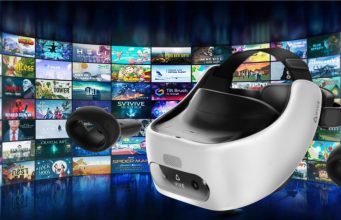
HTC today announced that it’s released support for 5Ghz WiFi streaming for Vive Focus Plus, as well as all 6DOF standalone headsets supporting the Vive Wave platform. Much like Oculus Quest’s Link functionality, Vive Focus Plus can now play PC VR titles through Viveport, albeit without the need of a cable.
Now released in beta, WiFi streaming is only being made available to subscribers of Viveport Infinity, the company’s Netflix-style subscription service for its digital distribution platform, which allows unlimited downloading of select content.
Outside of needing a Viveport Infinity subscription and Vive Focus Plus (or any other full-6DOF Vive Wave headset, which excludes the original Vive Focus) users will additionally need a VR-ready PC and a ‘standard’ 5Ghz WiFi router.
Vive Focus Plus, which is sold starting at $800, is couched as an enterprise-focused device in the US and Europe, however in China it was launched as a bona fide consumer device, which may explain why the only promotional information we’ve found so far is in Chinese, courtesy of VR publication Skarred Ghost.
As Skarred Ghost’s Antony Vitillo notes, there are currently 300 games and experiences on Viveport M, the mobile version of Viveport; with the inclusion of official WiFi streaming, this effectively opens that number up to over 2,000 titles.
HTC Vive China President Alvin Wang Graylin announced the news via Twitter, making sure to mention there’s also “no need for special wires or cables,” an apparent swipe at Oculus Quest requiring a USB-C cable to play Oculus Rift platform games.
Before today’s release, Vive Focus Plus users typically streamed PC VR games via two popular unofficial software choices: Rift Cat’s VRidge software and AMD ReLive.
We haven’t had a chance to compare those methods with the new Viveport streaming implementation, although we’ll be looking out for user reports in the meantime. Whatever the case, HTC’s native implementation will need to hit an acceptable latency and video quality to be considered a true competitor to Oculus Link for Quest, which thus far has worked pretty flawlessly. That’s outside the fact that Vive Focus Plus simply isn’t competing with the $400 Quest, as it’s been deliberately sold as an enterprise device in the West, and at double its price.
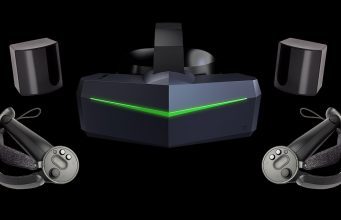
Pimax announced back in Fall that it was not only bringing more styles of its “8K” model headsets to market this year with the entrance of the $1,300 “8K” X and the $1,000 “8K” Plus, but that backers would finally get the headsets they’ve been waiting for, with shipments of “8K” Plus slated for shipment in late October. The company however today announced in a Kickstarter update that its original 2019 shipping window for all its headsets and accessories has been pushed back into late 2019 and early 2020.
Update (December 3rd, 2019): Pimax today announced the following delays and estimated shipping dates:
“8K” Plus – estimated to start shipping no later than the end of Dec. 2019 due to “last-minute changes to help ensure a quality launch.” Originally slated for October release.
“8K” X – estimated to start shipping late Mar. 2020, early Apr. 2020 due to being “still in development,” with the engineering team set to finish “assembly [of] some samples for testing this week.” Originally slated for Dec. release.
Pimax Comfort Kit – estimated to start shipping no later than the end of Dec 2019; shipping alongside “8K” Plus
Index Controllers & SteamVR Base Stations– estimated to start shipping early Jan. 2020 due to having just received Valve Index Controllers & base stations in an OEM bulk shipment. The company says they has to design consumer packaging for items by SKU, test controllers & base stations, and assemble components for shipping to different regions (Power supplies & instructions)
Modular Audio Strap (Standard) – estimated to start shipping late Jan. 2020, with first 20 pieces for a backers trial. Mass production is slated to arrive in late Jan.
Modular Audio Strap (Deluxe) – estimated to start shipping Mar 2020 due to the design “still being in development to ensure quality & comfort.”
Silicone Protective Sleeve – estimated to start shipping early Jan 2020
The original article announcing the “8K” Plus and “8K” X follows below:
Original Article (September 26th, 2019): Pimax’s base “8K” headset, priced at $900 without controllers or the requisite SteamVR basestations, already offers up dual 3,840×2,160 resolution CLPL panels, however design limitations only allow the headset to upscale from 2,560×1,440 resolution per display.
The “8K” X big claim to fame is it offers up native 3,840×2,160 rendering for each display at 75 Hz refresh, and at 90 Hz refresh when the integrated upscaler is enabled. Pimax says its using new panel tech for both “8K” X and “8K” Plus, which should provide higher contrast and deeper colors using an RBG stripe matrix LCD.
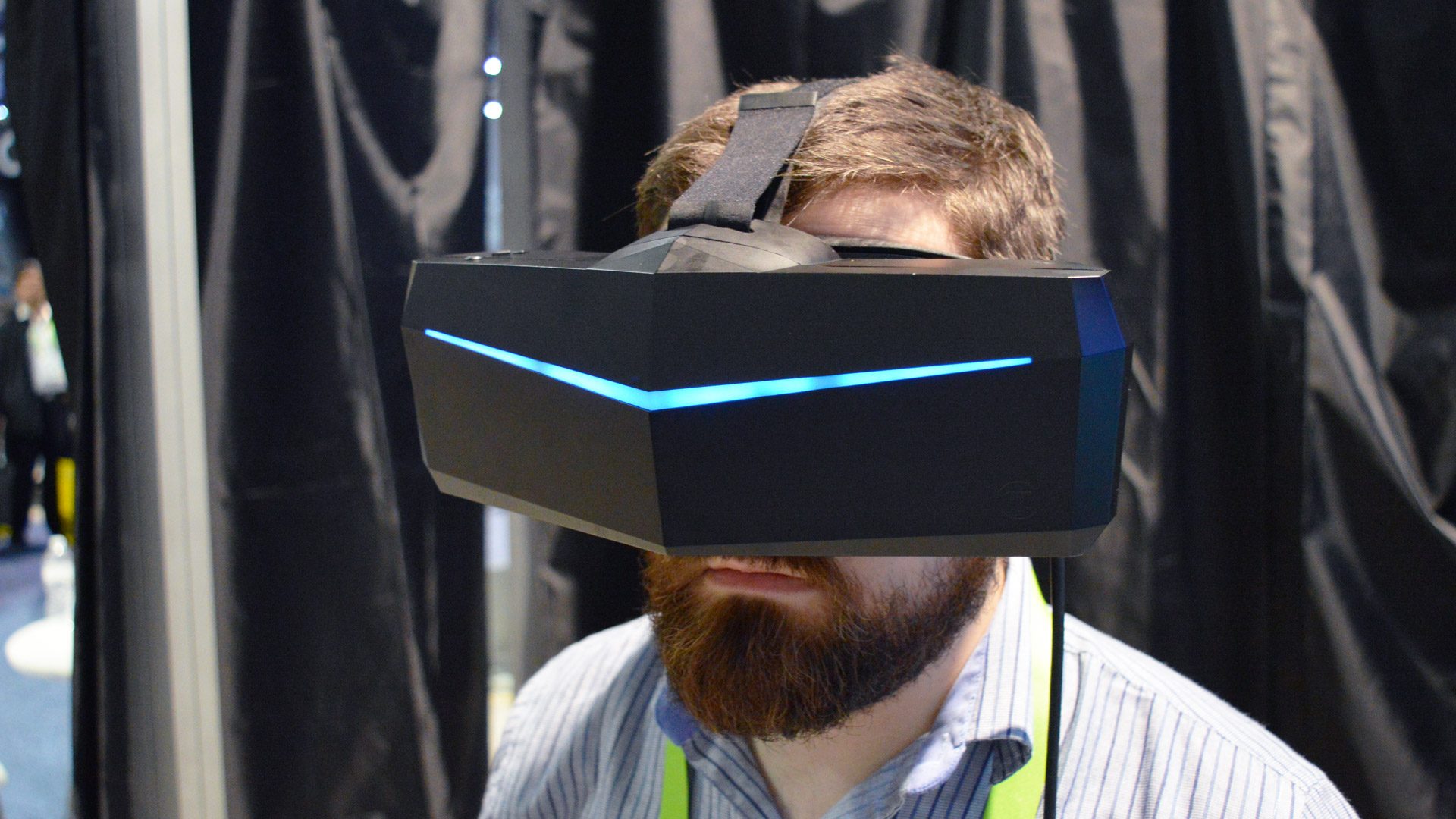
Pimax 8K, Photo by Road to VR
“8K” X, which was originally promised to arrive in May 2018 to Kickstarter backers, is said to start shipping to backers starting December 18th, 2019.
There’s still no word on when enthusiasts will be able to plonk down the cash for their own headset, although considering Pimax will be attending to backers first, the wait may bleed over into early 2020.
The “8K” Plus headset, which is slated to launch on October 30th, has the same panels as the “8K” X, however delivers content upscaled from 2,560×1,440 to the display’s native 3,840×2,160 resolution, just like the original “8K”.
The company says though that they’ve included a new algorithm for the upscaler, and that “8K” Plus comes with optional 65/72/90 Hz refresh rate.
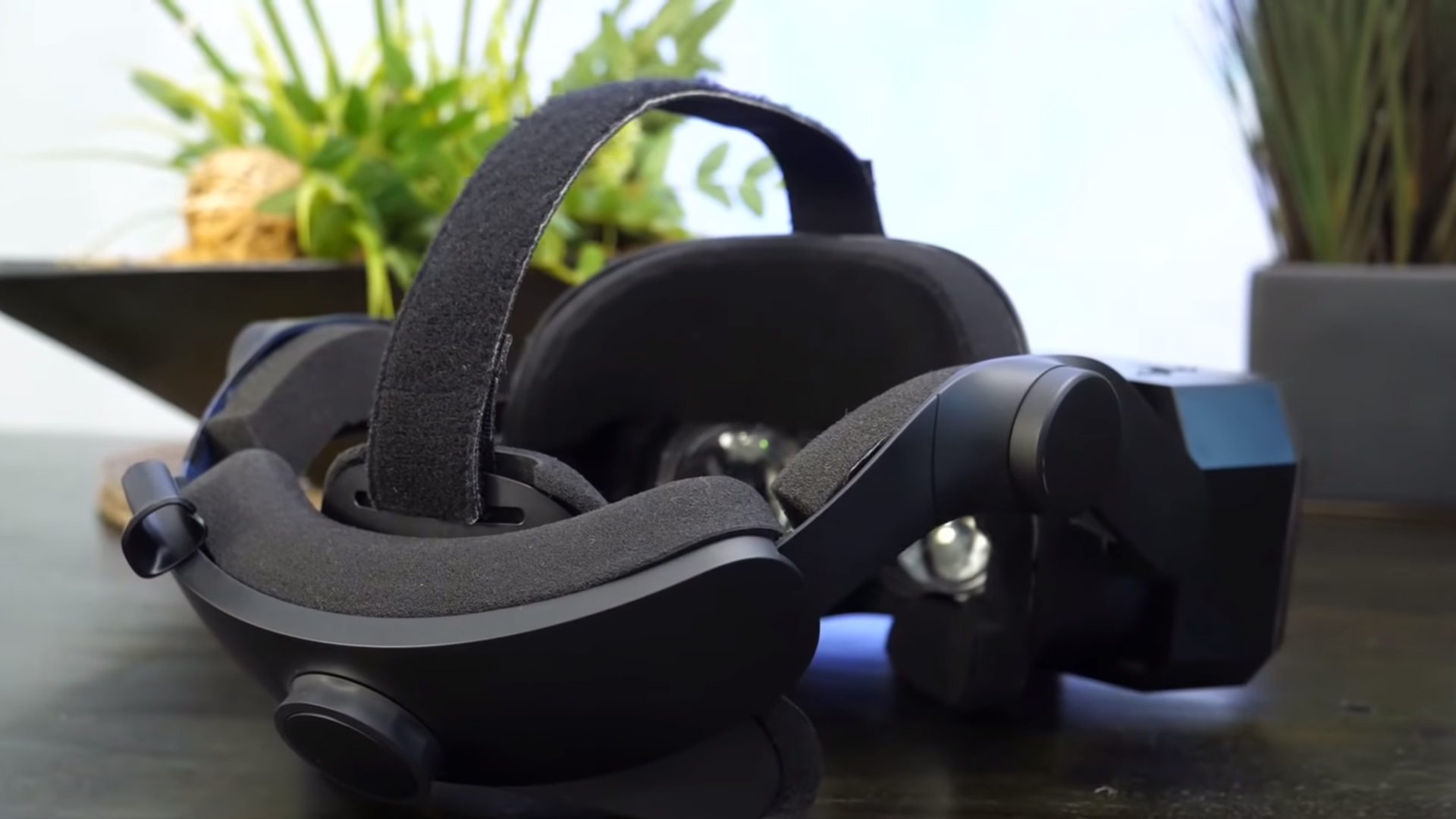
Both headsets are said to include between 10-15% better panel utilization over its predecessor and the same 170-degree horizontal field of view. Both however will arrive with a new modular audio strap and a wider facial interface called a ‘comfort kit’.
Image courtesy Pimax
Neither headset comes with controllers or SteamVR basestations, which must be purchased separately through Pimax, Valve, or HTC.
Ruggedization is coming to all models too, which consumers can op-in for by contacting the company. This includes a special rubberized coating and metallic buttons to the headset, which is said to increase durability and water resistance.
There aren’t any pre-order links yet, although we’ll update this piece when the time comes. In any case, you’ll be sure to find more info soon on Pimax’s website.
– – — – –
If you’re wondering why we’ve put 8K in quotations, its because each panel is only 4K in resolution. This means you only see the max benefit of a single display’s resolution since both are combined to form a single stereoscopic picture.




 Just update sw to latest.

 (VR+PC UI below)